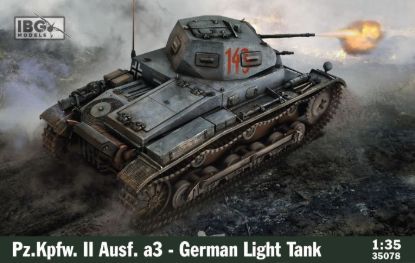
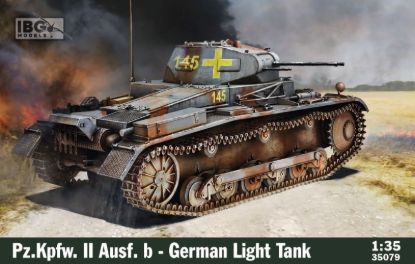
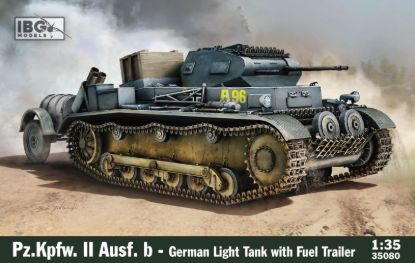
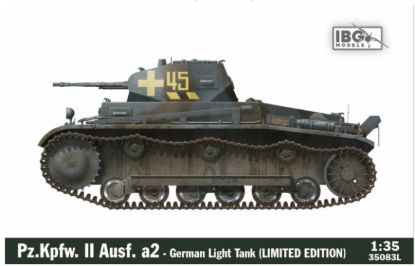
Although the vehicle had originally been designed as a stopgap while larger, more advanced tanks were developed, it nonetheless went on to play an important role in the early years of World War II, during the Polish and French campaigns. The Panzer II was the most numerous tank in the German Panzer divisions at the beginning of the war. It was used both in North Africa against the Western Allies and on the Eastern Front against the Soviet Union.
Although the vehicle had originally been designed as a stopgap while larger, more advanced tanks were developed, it nonetheless went on to play an important role in the early years of World War II, during the Polish and French campaigns. The Panzer II was the most numerous tank in the German Panzer divisions at the beginning of the war. It was used both in North Africa against the Western Allies and on the Eastern Front against the Soviet Union.
Although the vehicle had originally been designed as a stopgap while larger, more advanced tanks were developed, it nonetheless went on to play an important role in the early years of World War II, during the Polish and French campaigns. The Panzer II was the most numerous tank in the German Panzer divisions at the beginning of the war. It was used both in North Africa against the Western Allies and on the Eastern Front against the Soviet Union.
Although the vehicle had originally been designed as a stopgap while larger, more advanced tanks were developed, it nonetheless went on to play an important role in the early years of World War II, during the Polish and French campaigns. The Panzer II was the most numerous tank in the German Panzer divisions at the beginning of the war. It was used both in North Africa against the Western Allies and on the Eastern Front against the Soviet Union.
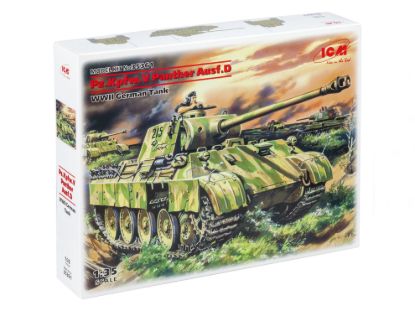
The Panther tank, officially Panzerkampfwagen V Panther (abbreviated Pz.Kpfw. V) with ordnance inventory designation: Sd.Kfz. 171, is a German medium tank of World War II. It was used in most European theatres of World War II from mid-1943 to the end of the war in May 1945.
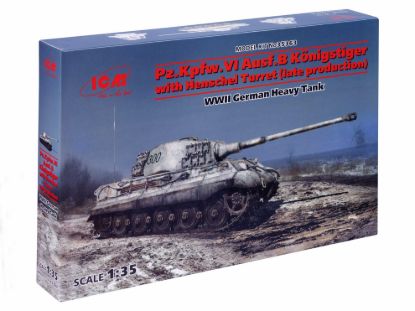
The Tiger II was the successor to the Tiger I, combining the latter's thick armour with the armour sloping used on the Panther medium tank. Contemporaneous Allied soldiers often called it the King Tiger or Royal Tiger. It was the costliest German tank to produce at the time. The tank weighed almost 70 tonnes and was protected by 100 to 185 mm (3.9 to 7.3 in) of armour to the front. It was armed with the long barrelled (71 calibres) 8.8 cm KwK 43 anti-tank cannon. The chassis was also the basis for the Jagdtiger turretless Jagdpanzer anti-tank vehicle.
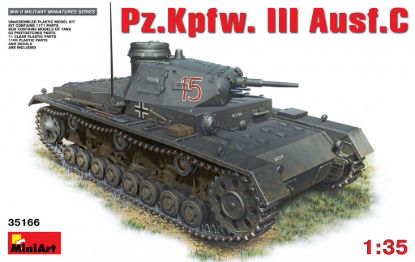
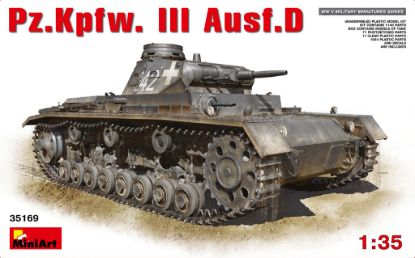
The Sd.Kfz. 141, also known as the Panzer III, was a medium tank developed by Germany in the 1930s. It was intended to engage other armored fighting vehicles and serve alongside the Panzer IV, which was designed for infantry support.
The Sd.Kfz. 141, also known as the Panzer III, was a medium tank developed by Germany in the 1930s. It was intended to engage other armored fighting vehicles and serve alongside the Panzer IV, which was designed for infantry support.
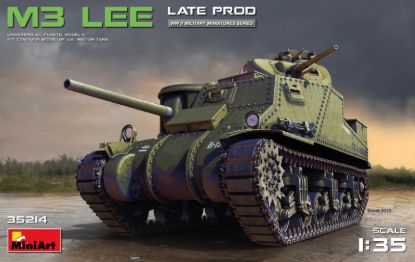
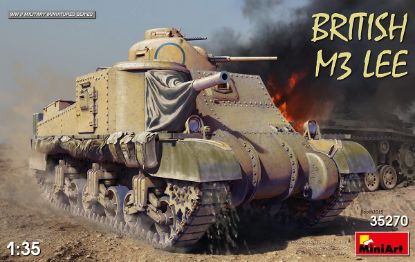
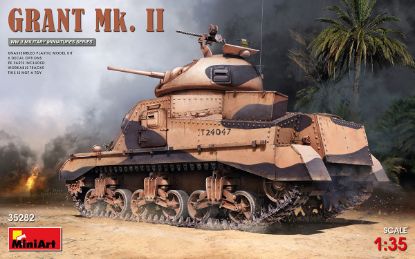
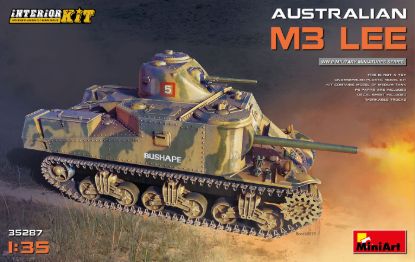
The M3 Lee, officially Medium Tank, M3, was an American medium tank used during World War II. The turret was produced in two different forms, one for US needs and one modified to British requirements to place the radio next to the commander. In British Commonwealth service, the tank was called by two names: tanks employing US-pattern turrets were called "Lee", named after Confederate general Robert E. Lee, while those with British-pattern turrets were known as "Grant", named after Union general Ulysses S. Grant.
The M3 Lee, officially Medium Tank, M3, was an American medium tank used during World War II. The turret was produced in two different forms, one for US needs and one modified to British requirements to place the radio next to the commander. In British Commonwealth service, the tank was called by two names: tanks employing US-pattern turrets were called "Lee", named after Confederate general Robert E. Lee, while those with British-pattern turrets were known as "Grant", named after Union general Ulysses S. Grant.
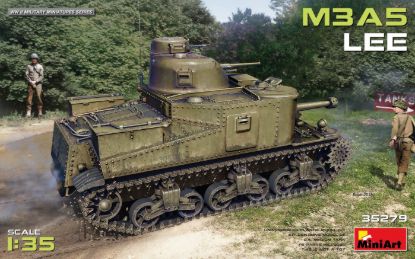
The M3A5 medium tank upgrades included, Diesel-engined variant with rivetted hull; Twin GM 6-71 diesel engines coupled together to make the GM6046 powerpack; Side doors welded shut or later eliminated. 591 M3A3 medium tanks were built, 387 as Grant IIs, 23 supplied to Brazil.
The M3 Lee, officially Medium Tank, M3, was an American medium tank used during World War II. The turret was produced in two different forms, one for US needs and one modified to British requirements to place the radio next to the commander. In British Commonwealth service, the tank was called by two names: tanks employing US-pattern turrets were called "Lee", named after Confederate general Robert E. Lee, while those with British-pattern turrets were known as "Grant", named after Union general Ulysses S. Grant.
The M3 Lee, officially Medium Tank, M3, was an American medium tank used during World War II. The turret was produced in two different forms, one for US needs and one modified to British requirements to place the radio next to the commander. In British Commonwealth service, the tank was called by two names: tanks employing US-pattern turrets were called "Lee", named after Confederate general Robert E. Lee, while those with British-pattern turrets were known as "Grant", named after Union general Ulysses S. Grant.