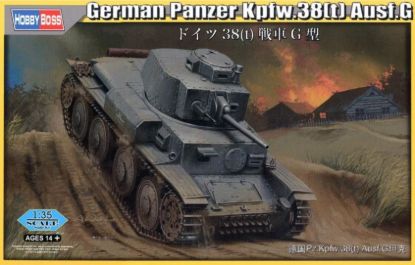
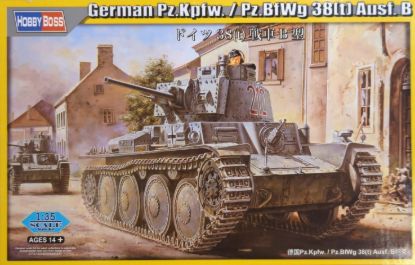
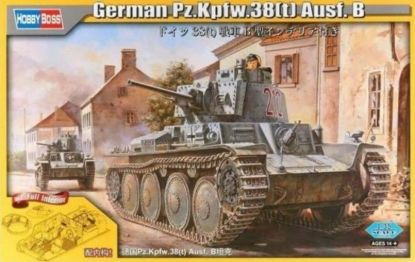
The Panzerkampfwagen 38(t), originally known as the Českomoravská Kolben-Daněk (ČKD) LT vz. 38, was a tank designed during the 1930s, which saw extensive service during World War II. Developed in Czechoslovakia by ČKD, the type was adopted by Nazi Germany following the German occupation of Czechoslovakia. With the German Army and other Axis forces, the type saw service in the invasions of Poland, France and the USSR.
The Panzerkampfwagen 38(t), originally known as the Českomoravská Kolben-Daněk (ČKD) LT vz. 38, was a tank designed during the 1930s, which saw extensive service during World War II. Developed in Czechoslovakia by ČKD, the type was adopted by Nazi Germany following the German occupation of Czechoslovakia. With the German Army and other Axis forces, the type saw service in the invasions of Poland, France and the USSR.
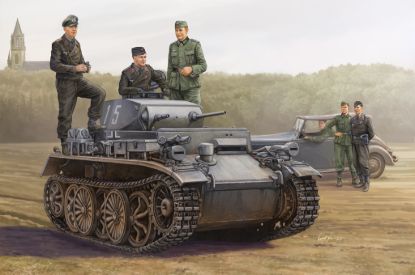
The Panzer I was a light tank produced by Germany in the 1930s. Its name is short for Panzerkampfwagen I, abbreviated as Pz.Kpfw. I. The tank's official German ordnance inventory designation was Sd.Kfz. 101 ("special purpose vehicle 101").
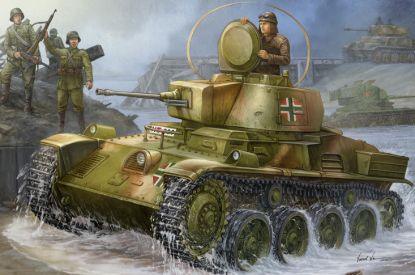
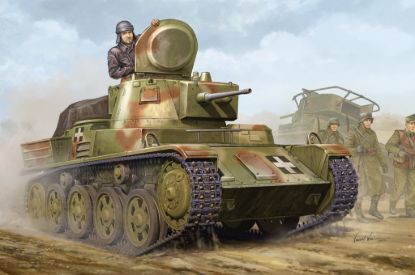
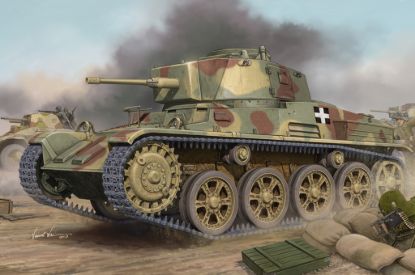
The Toldi was a Hungarian light tank of World War II, developed on the basis of the Swedish Landsverk L-60. It was named after the 14th century Hungarian knight Miklós Toldi. The Toldi was made in several different variants including some armed with a 20 mm gun, some armed with a 40 mm gun, some fitted with schürzen plates, and even a prototype tank destroyer variant armed with a 75 mm gun. At least one was even fitted with heavy anti-tank rocket launchers.
The Toldi was a Hungarian light tank of World War II, developed on the basis of the Swedish Landsverk L-60. It was named after the 14th century Hungarian knight Miklós Toldi. The Toldi was made in several different variants including some armed with a 20 mm gun, some armed with a 40 mm gun, some fitted with schürzen plates, and even a prototype tank destroyer variant armed with a 75 mm gun. At least one was even fitted with heavy anti-tank rocket launchers.
The Toldi was a Hungarian light tank of World War II, developed on the basis of the Swedish Landsverk L-60. It was named after the 14th century Hungarian knight Miklós Toldi. The Toldi was made in several different variants including some armed with a 20 mm gun, some armed with a 40 mm gun, some fitted with schürzen plates, and even a prototype tank destroyer variant armed with a 75 mm gun. At least one was even fitted with heavy anti-tank rocket launchers.
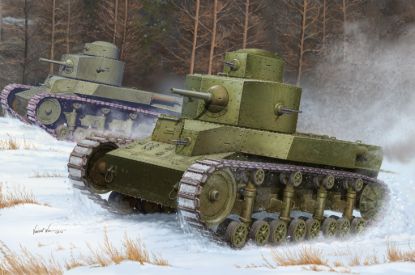
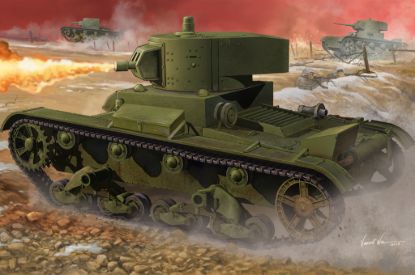
KhT-130 (OT-130) Flamethrower tank was a variant of the T-26 light infantry tank model 1933, using a larger 45 mm gun turret (main gun was replaced with a flamethrower).
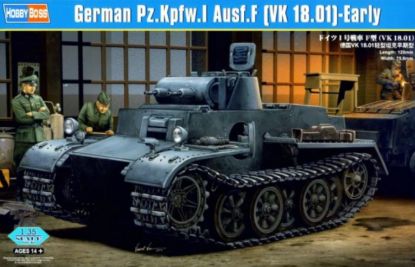
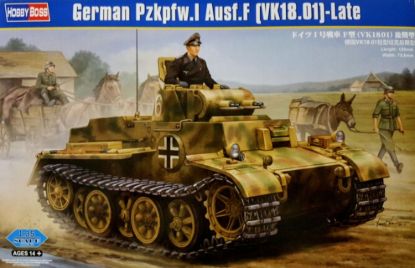
The Panzer I Ausf. F, was as different from the Ausf. C as it was from the Ausf. A and B.[28] Intended as an infantry support tank, the Panzer I Ausf. F had a maximum armor thickness of 80 millimeters (3.15 in) and weighed between 18 and 21 tonnes.[29] The Ausf. F was armed with two 7.92 mm MG-34s.[30] Thirty were produced in 1940, and a second order of 100 was later canceled. In order to compensate for the increased weight, a new 150 horsepower (110 kW) Maybach HL45 Otto engine was used, allowing a maximum road speed of 25 kilometers per hour (15.5 mph) and used five overlapping road wheels per side, dropping the Ausf. C's interleaved units.
The Panzer I Ausf. F, was as different from the Ausf. C as it was from the Ausf. A and B.[28] Intended as an infantry support tank, the Panzer I Ausf. F had a maximum armor thickness of 80 millimeters (3.15 in) and weighed between 18 and 21 tonnes.[29] The Ausf. F was armed with two 7.92 mm MG-34s.[30] Thirty were produced in 1940, and a second order of 100 was later canceled. In order to compensate for the increased weight, a new 150 horsepower (110 kW) Maybach HL45 Otto engine was used, allowing a maximum road speed of 25 kilometers per hour (15.5 mph) and used five overlapping road wheels per side, dropping the Ausf. C's interleaved units.