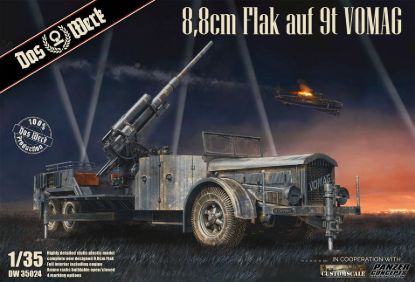
8.8 cm Flak 18 anti-aircraft guns were mounted on fifteen Sd.Kfz. 9s in 1940 as the 8.8 cm Flak 18 (Sfl.) auf Zugkraftwagen 18t (Sd.Kfz. 9) for anti-tank duties. The crew and engine compartments were lightly (14.5 mm (0.57 in)), but completely, armored, which limited the gun's ability to fire directly ahead. A platform with drop-down sides was fitted for the gun. Outriggers were necessary to brace the platform sides to support the weight of the gun crew.
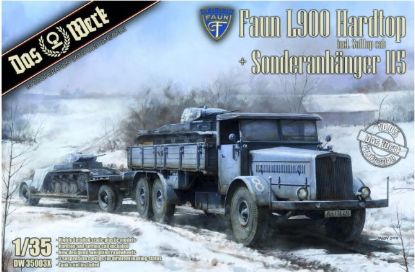
The FAUN L900 D567 was a significant military vehicle in the German Army's logistics during World War II. It was designed to transport and carry small tanks and armored vehicles, making it an essential tool for the Wehrmacht's operations.
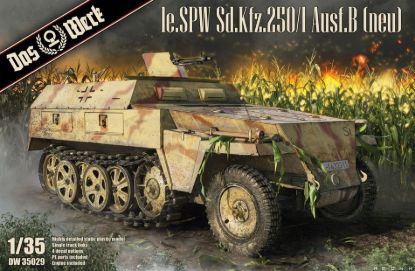
The Sd.Kfz. 250/1 was a versatile and crucial vehicle for the Wehrmacht during World War II. It served as an armored personnel carrier, typically carrying a small reconnaissance team of four to six soldiers. The vehicle's open-topped design and relatively light armor provided protection against small arms fire and shell splinters, while its half-track configuration offered excellent cross-country mobility.
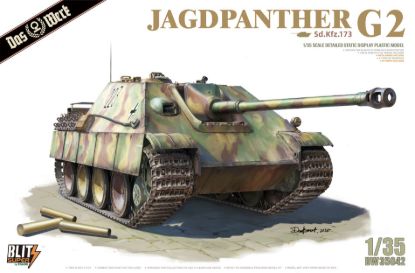
The Jagdpanther (German: "hunting Panther"), Sd.Kfz. 173, was a tank destroyer built by Germany during World War II. The Jagdpanther combined the 8.8 cm Pak 43 anti-tank gun, similar to the main gun of the Tiger II, with the armor and suspension of the Panther chassis.
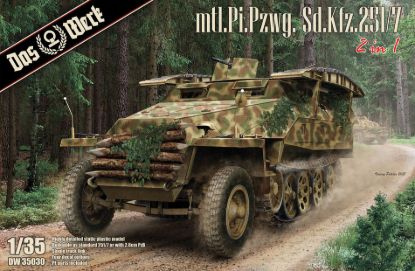
This vehicle was a familiar sight, widely associated with the German infantry during all of World War Two. It began simply as an armored version of the Sd.Kfz.11 half-tracked artillery tractor. The half-track was one of the several solutions given to the problem of low off-road capabilities of trucks and associated “special purpose vehicles” (Sonderkraftfahrzeug). The Sd.Kfz.11 was designed in 1938 by Hanomag and was the prime mover for the 105 mm (4.13 in) LeFH howitzer and 37 mm (1.46 in) Flak 43, and 9000 units were built until 1945. This company was the natural choice to fulfill the next Waffenamt specification, which requested an armored vehicle capable of carrying a section of Panzergrenadiers and their equipment in order to keep up with the Panzer Divisions. Each German mechanized infantry corps was to be equipped with a hundred of these. The protection given had to be sufficient against small arms fire and artillery shrapnel, and armament should comprise two MG 34 machine-guns for defense and direct support. In German nomenclature it was classed as a Mittlere Schützenpanzerwagen (“Medium Assault Armored Vehicle”).
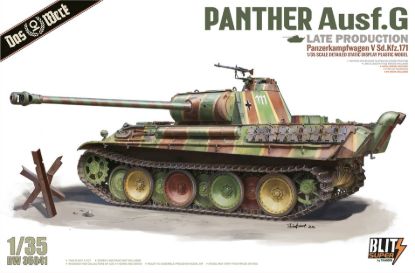
The Panther I Ausf G was the final version of the Panther to enter production during the Second World War, and was produced in larger numbers than the previous two versions combined.
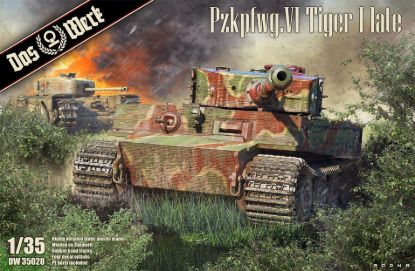
From the early days of combat against this tank in WW2 until the present day, the fame of the Tiger spans, in equal amounts, its real development history, combat performance, and fandom. It is a tank with many flaws and one whose mystique, even back in WW2, was out of all proportion to its utility and service as a combat vehicle. Yet, despite its flaws and problems, the tank remains a potent symbol of WW2 and, for many, it is the tank which served as their introduction to the world of armored fighting vehicles.