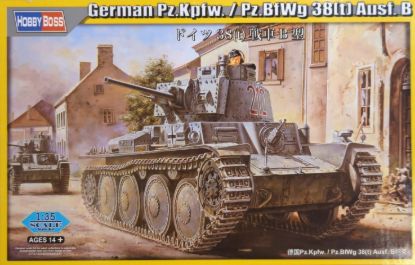
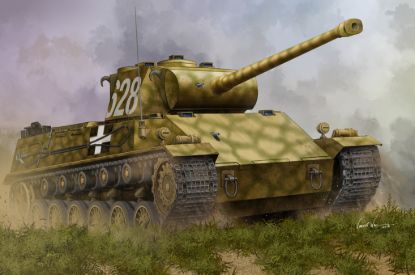
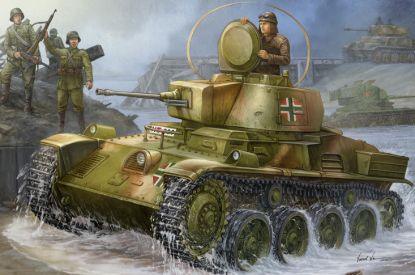
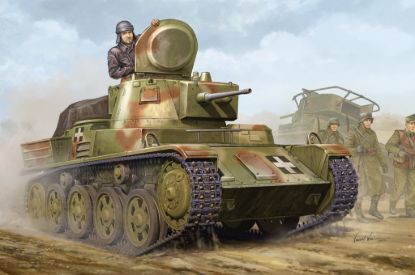
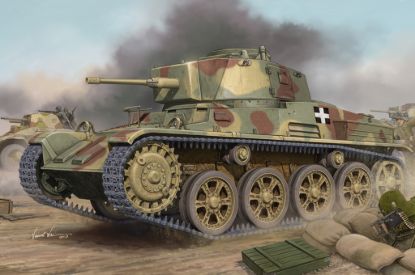
The Panzerkampfwagen 38(t), originally known as the Českomoravská Kolben-Daněk (ČKD) LT vz. 38, was a tank designed during the 1930s, which saw extensive service during World War II. Developed in Czechoslovakia by ČKD, the type was adopted by Nazi Germany following the German occupation of Czechoslovakia. With the German Army and other Axis forces, the type saw service in the invasions of Poland, France and the USSR.
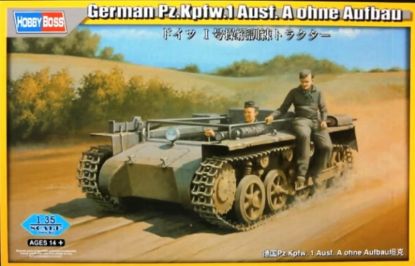
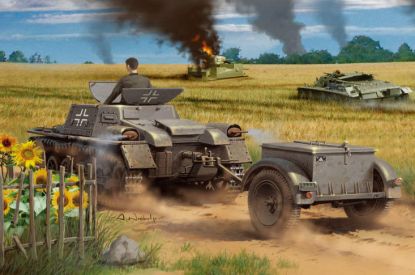
The Sd.Kfz.111, also known as the gepanzerte Munitionsschlepper, was a military vehicle used by Nazi Germany during World War II. It was primarily based on the chassis of the Panzerkampfwagen I M.G. Sd. Kfz. 101 Ausf. A and was designed to transport ammunition. The vehicle was created by removing the turret and adding a simple open-topped box body. It was intended for units equipped with the 7.62 cm Pak 36 (r) ammunition. The Sd.Kfz.111 was converted from 50 vehicles, with additional contracts for conversion reported by DEW, leading to a total of 122 vehicles converted by the end of the war.
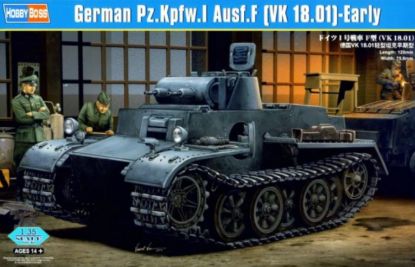
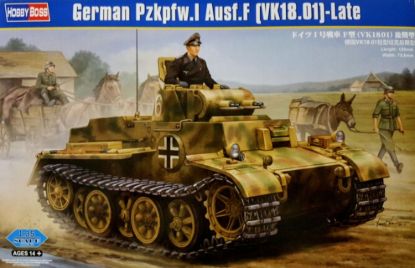
The Panzer I Ausf. F, was as different from the Ausf. C as it was from the Ausf. A and B.[28] Intended as an infantry support tank, the Panzer I Ausf. F had a maximum armor thickness of 80 millimeters (3.15 in) and weighed between 18 and 21 tonnes.[29] The Ausf. F was armed with two 7.92 mm MG-34s.[30] Thirty were produced in 1940, and a second order of 100 was later canceled. In order to compensate for the increased weight, a new 150 horsepower (110 kW) Maybach HL45 Otto engine was used, allowing a maximum road speed of 25 kilometers per hour (15.5 mph) and used five overlapping road wheels per side, dropping the Ausf. C's interleaved units.
The Panzer I Ausf. F, was as different from the Ausf. C as it was from the Ausf. A and B.[28] Intended as an infantry support tank, the Panzer I Ausf. F had a maximum armor thickness of 80 millimeters (3.15 in) and weighed between 18 and 21 tonnes.[29] The Ausf. F was armed with two 7.92 mm MG-34s.[30] Thirty were produced in 1940, and a second order of 100 was later canceled. In order to compensate for the increased weight, a new 150 horsepower (110 kW) Maybach HL45 Otto engine was used, allowing a maximum road speed of 25 kilometers per hour (15.5 mph) and used five overlapping road wheels per side, dropping the Ausf. C's interleaved units.
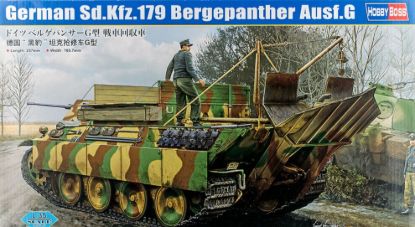
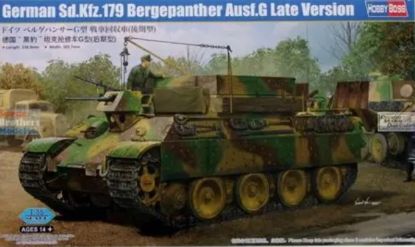
The Bergepanzerwagen V (Sd.Kfz. 179), often referred to as the "Bergepanther", was an armoured recovery vehicle used by the German Army in WWII. It was a variant of the Panzerkampfwagen V Panther (Sd.Kfz. 171).
The Bergepanzerwagen V (Sd.Kfz. 179), often referred to as the "Bergepanther", was an armoured recovery vehicle used by the German Army in WWII. It was a variant of the Panzerkampfwagen V Panther (Sd.Kfz. 171).
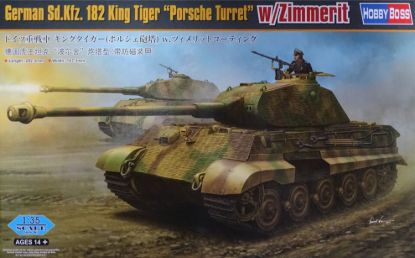
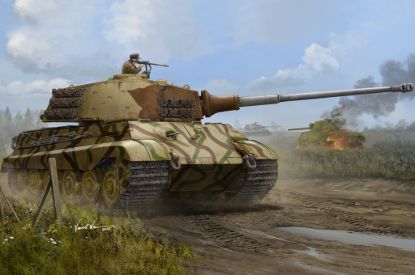
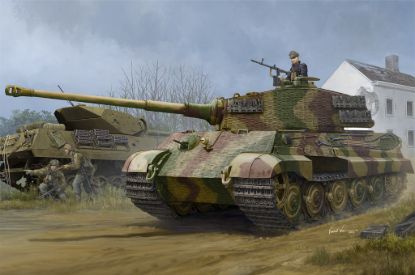
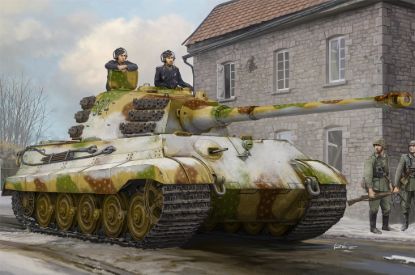
The Tiger II was the successor to the Tiger I, combining the latter's thick armour with the armour sloping used on the Panther medium tank. Contemporaneous Allied soldiers often called it the King Tiger or Royal Tiger. It was the costliest German tank to produce at the time. The tank weighed almost 70 tonnes and was protected by 100 to 185 mm (3.9 to 7.3 in) of armour to the front. It was armed with the long barrelled (71 calibres) 8.8 cm KwK 43 anti-tank cannon. The chassis was also the basis for the Jagdtiger turretless Jagdpanzer anti-tank vehicle.
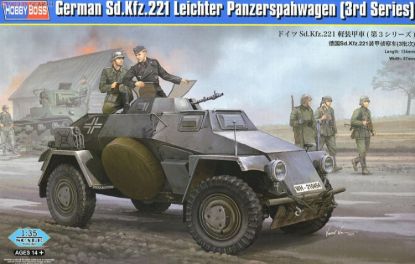
The Leichter Panzerspähwagen (Sd.Kfz. 221) was the first in a series of light reconnaissance vehicles designed to meet operational requirements including reliability, an ability to run on a variety of grades of fuel, simple construction and good off-road performance.
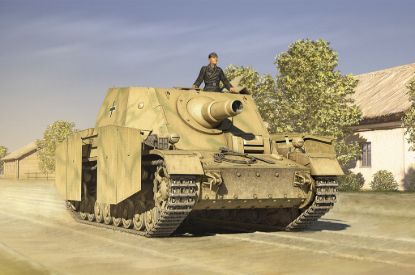
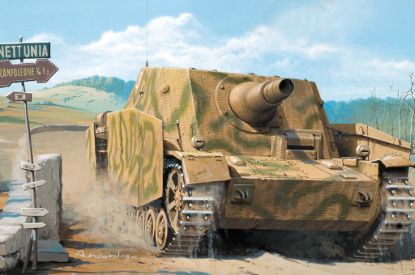
The Sturmpanzer (also known as Sturmpanzer 43 or Sd.Kfz. 166) is a German armoured infantry support gun based on the Panzer IV chassis used in the Second World War. It was used at the Battles of Kursk, Anzio, Normandy, and was deployed in the Warsaw Uprising. It was known by the nickname Brummbär (German: "Grouch")[Note 1] by Allied intelligence, a name which was not used by the Germans. German soldiers nicknamed it the "Stupa", a contraction of the term Sturmpanzer. Just over 300 vehicles were built and they were assigned to four independent battalions.
The Sturmpanzer (also known as Sturmpanzer 43 or Sd.Kfz. 166) is a German armoured infantry support gun based on the Panzer IV chassis used in the Second World War. It was used at the Battles of Kursk, Anzio, Normandy, and was deployed in the Warsaw Uprising. It was known by the nickname Brummbär (German: "Grouch")[Note 1] by Allied intelligence, a name which was not used by the Germans. German soldiers nicknamed it the "Stupa", a contraction of the term Sturmpanzer. Just over 300 vehicles were built and they were assigned to four independent battalions.
The Toldi was a Hungarian light tank of World War II, developed on the basis of the Swedish Landsverk L-60. It was named after the 14th century Hungarian knight Miklós Toldi. The Toldi was made in several different variants including some armed with a 20 mm gun, some armed with a 40 mm gun, some fitted with schürzen plates, and even a prototype tank destroyer variant armed with a 75 mm gun. At least one was even fitted with heavy anti-tank rocket launchers.
The Toldi was a Hungarian light tank of World War II, developed on the basis of the Swedish Landsverk L-60. It was named after the 14th century Hungarian knight Miklós Toldi. The Toldi was made in several different variants including some armed with a 20 mm gun, some armed with a 40 mm gun, some fitted with schürzen plates, and even a prototype tank destroyer variant armed with a 75 mm gun. At least one was even fitted with heavy anti-tank rocket launchers.
The Toldi was a Hungarian light tank of World War II, developed on the basis of the Swedish Landsverk L-60. It was named after the 14th century Hungarian knight Miklós Toldi. The Toldi was made in several different variants including some armed with a 20 mm gun, some armed with a 40 mm gun, some fitted with schürzen plates, and even a prototype tank destroyer variant armed with a 75 mm gun. At least one was even fitted with heavy anti-tank rocket launchers.
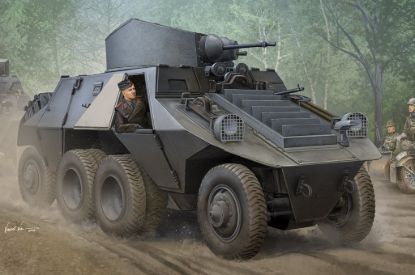
The ADGZ had 12 wheels, 4 axles, four headlights (two on each end), 6mm thick armor on the front, rear, and sides, and a dual transmission which allowed for the car to be driven from either end. The circular central turret housed a 20mm KwK 35 L/45 autocannon. Both sides were fitted with two half-doors where the top and bottom portions could be opened independently, as well as a ball mount on each side for an MG 34 machine gun.
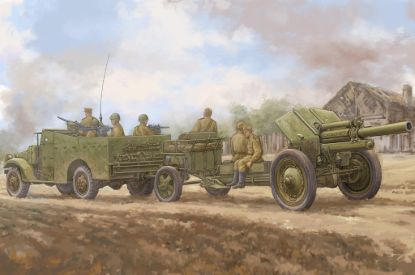
The M3A1 Scout Car, also known as the White Scout Car, was an American armored car produced during World War II. It was used in various roles, including patrol, scouting, command vehicle, ambulance, and gun tractor.
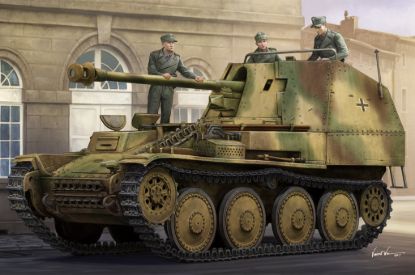
The Marder III, specifically, was equipped with the German 7.5 cm PaK 40 anti-tank gun, which was highly effective in penetrating the armor of most Allied tanks at standard engagement ranges. The Marder III served on all fronts until the end of the war, providing significant firepower to counter the thick-armored T-34s.
The Sd.Kfz.111, also known as the gepanzerte Munitionsschlepper, was a military vehicle used by Nazi Germany during World War II. It was primarily based on the chassis of the Panzerkampfwagen I M.G. Sd. Kfz. 101 Ausf. A and was designed to transport ammunition. The vehicle was created by removing the turret and adding a simple open-topped box body. It was intended for units equipped with the 7.62 cm Pak 36 (r) ammunition. The Sd.Kfz.111 was converted from 50 vehicles, with additional contracts for conversion reported by DEW, leading to a total of 122 vehicles converted by the end of the war.
The Tiger II was the successor to the Tiger I, combining the latter's thick armour with the armour sloping used on the Panther medium tank. Contemporaneous Allied soldiers often called it the King Tiger or Royal Tiger. It was the costliest German tank to produce at the time. The tank weighed almost 70 tonnes and was protected by 100 to 185 mm (3.9 to 7.3 in) of armour to the front. It was armed with the long barrelled (71 calibres) 8.8 cm KwK 43 anti-tank cannon. The chassis was also the basis for the Jagdtiger turretless Jagdpanzer anti-tank vehicle.
The Tiger II was the successor to the Tiger I, combining the latter's thick armour with the armour sloping used on the Panther medium tank. Contemporaneous Allied soldiers often called it the King Tiger or Royal Tiger. It was the costliest German tank to produce at the time. The tank weighed almost 70 tonnes and was protected by 100 to 185 mm (3.9 to 7.3 in) of armour to the front. It was armed with the long barrelled (71 calibres) 8.8 cm KwK 43 anti-tank cannon. The chassis was also the basis for the Jagdtiger turretless Jagdpanzer anti-tank vehicle.
The Tiger II was the successor to the Tiger I, combining the latter's thick armour with the armour sloping used on the Panther medium tank. Contemporaneous Allied soldiers often called it the King Tiger or Royal Tiger. It was the costliest German tank to produce at the time. The tank weighed almost 70 tonnes and was protected by 100 to 185 mm (3.9 to 7.3 in) of armour to the front. It was armed with the long barrelled (71 calibres) 8.8 cm KwK 43 anti-tank cannon. The chassis was also the basis for the Jagdtiger turretless Jagdpanzer anti-tank vehicle.