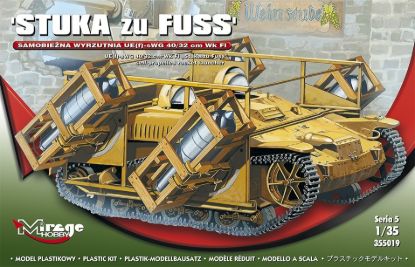
The Renault UE(f) Munitionsschlepper played a crucial role in the military operations of both France and Germany during World War II, showcasing the versatility and adaptability of military vehicles in the face of changing battlefield conditions.
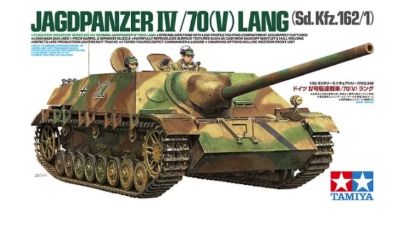
The Jagdpanzer IV / Sd.Kfz. 162, was a German tank destroyer based on the Panzer IV chassis and built in three main variants. As one of the casemate-style turretless Jagdpanzer (tank destroyer, literally "hunting tank") designs, it was developed against the wishes of Heinz Guderian, the inspector general of the Panzertruppen, as a replacement for the Sturmgeschütz III (StuG III). Guderian objected against the (in his eyes) needless diversion of resources from Panzer IV tank production, as the StuG III was still more than adequate for its role.
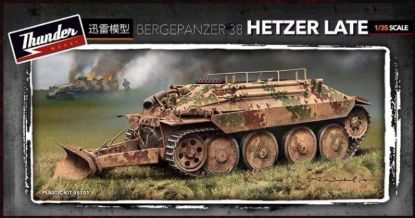
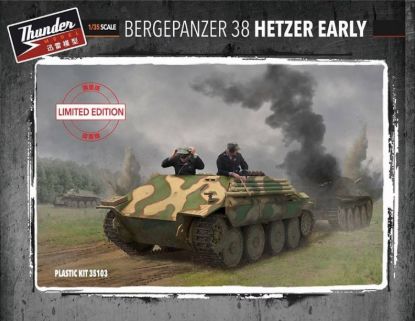
The light recovery vehicle Bergepanzer 38 or Bergepanzerwagen 38 was based on the German Jagdpanzer 38, the Hetzer tank destroyer. This light recovery vehicle, German designation Sd.Kfz. 136, was used with the Jagdpanzer units and helped repair the tank destroyers, it was capable of towing or pulling the Hetzer tanks if broken down or stuck. Between 170 to 181 were built from August 1944 until the end of the war. It used a Fug 5 radio set and was armed with a MG 34.
The light recovery vehicle Bergepanzer 38 or Bergepanzerwagen 38 was based on the German Jagdpanzer 38, the Hetzer tank destroyer. This light recovery vehicle, German designation Sd.Kfz. 136, was used with the Jagdpanzer units and helped repair the tank destroyers, it was capable of towing or pulling the Hetzer tanks if broken down or stuck. Between 170 to 181 were built from August 1944 until the end of the war. It used a Fug 5 radio set and was armed with a MG 34.
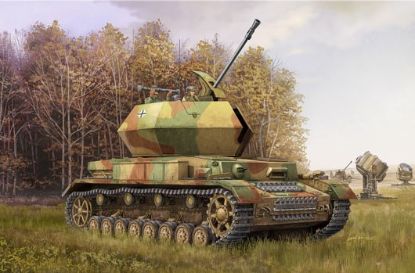
The Flakpanzer IV "Ostwind" was a significant development in the German military's efforts to counter the increasing air threat during World War II. Its primary role was as an anti-aircraft weapon, but it also provided protection against light vehicles and minor fortifications.
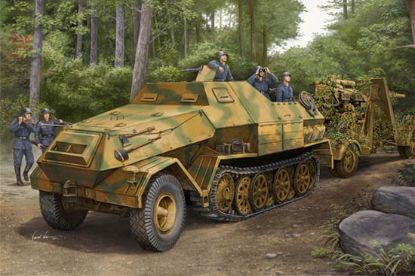
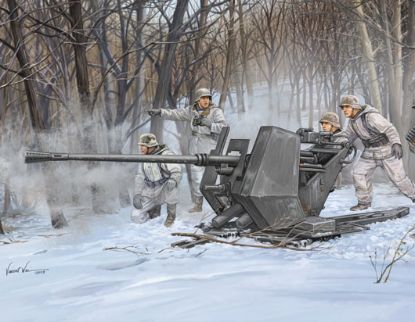
The Sonderkraftfahrzeug 8 ("special motorized vehicle 8"), usually abbreviated to Sd.Kfz. 8, was a German half-track designed by Daimler-Benz that saw widespread use in World War II. Its main roles were as a prime mover for heavy towed guns such as the 21 cm Mörser 18, the 17 cm Kanone 18 and the 10.5 cm FlaK 38. It also served as an infantry transport. Approximately 4,000 were produced between 1938 and 1945. It was used in every campaign fought by the Germans in World War II, notably the Invasion of Poland, the Battle of France, the Balkans Campaign, the Eastern Front, the North African Campaign, the Battle of Normandy and the Italian Campaign.
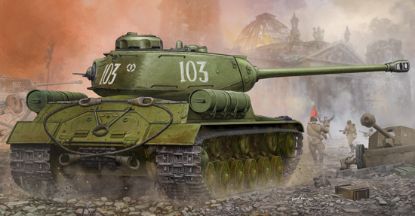
The JS-2's military history is marked by its effectiveness in combat against German Panther tanks, showcasing its capabilities and the legacy it left behind. Its design and performance set a precedent for Soviet tank development doctrine for decades to come.
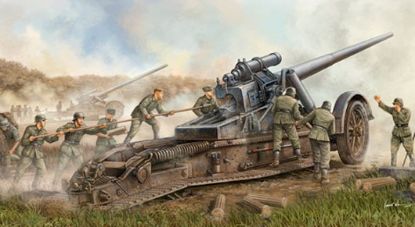
The 17 cm Kanone 18 in Mörserlafette (English: 17 cm Cannon 18 on Mortar Carriage), abbreviated as 17 cm K 18 in MrsLaf, was a German heavy gun used during World War II.