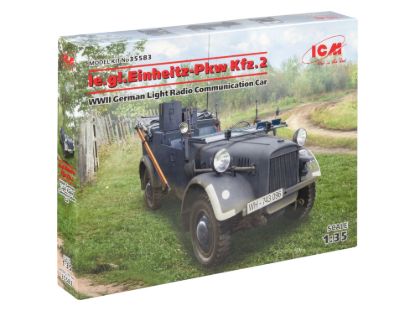
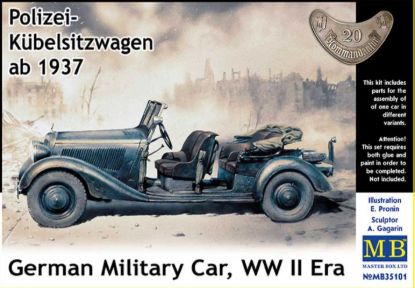
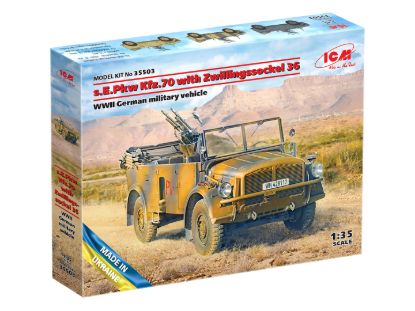
The Kfz 4 Einheits-Pkw were used by repair-and-maintenance squads (Kfz. 2/40), also known as the Einheits-PKW, was a 4x4 light truck used by Germany during World War II.
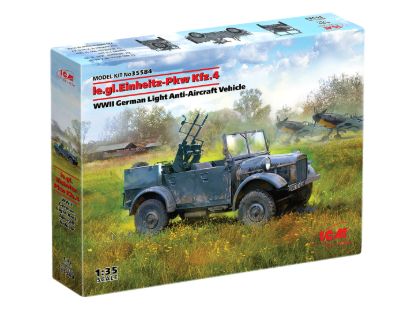
The Kfz 2 Einheits-Pkw were used as troop-level aerial defence (Kfz. 4), also known as the Einheits-PKW, was a 4x4 light truck used by Germany during World War II.
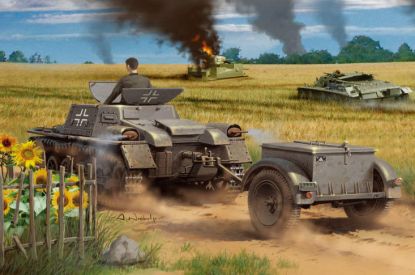
The Sd.Kfz.111, also known as the gepanzerte Munitionsschlepper, was a military vehicle used by Nazi Germany during World War II. It was primarily based on the chassis of the Panzerkampfwagen I M.G. Sd. Kfz. 101 Ausf. A and was designed to transport ammunition. The vehicle was created by removing the turret and adding a simple open-topped box body. It was intended for units equipped with the 7.62 cm Pak 36 (r) ammunition. The Sd.Kfz.111 was converted from 50 vehicles, with additional contracts for conversion reported by DEW, leading to a total of 122 vehicles converted by the end of the war.
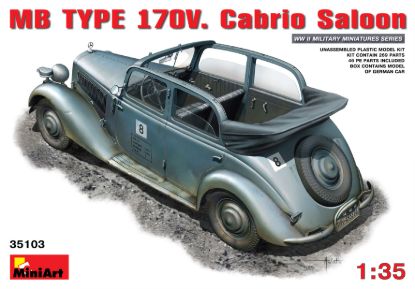
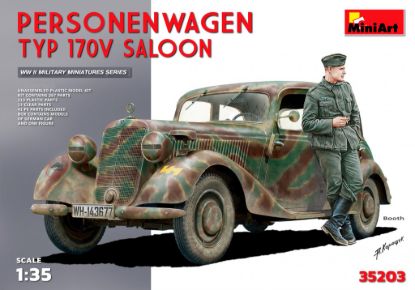
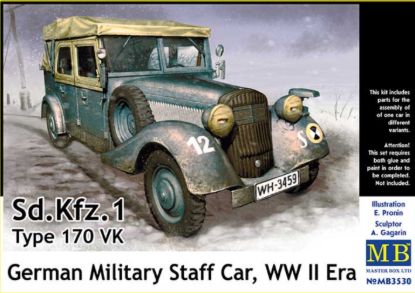
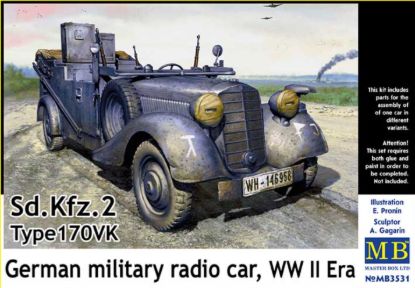
The Sd.Kfz. 1 Type 170 VK, also known as the Mercedes-Benz 170 VK, was a military vehicle adapted from the civilian 170V model. It was designed for military use, featuring a tough frame, flat surfaces, and off-road tires, making it suitable for rough terrain.
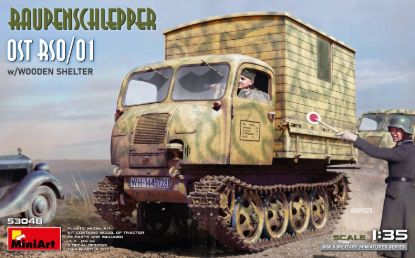
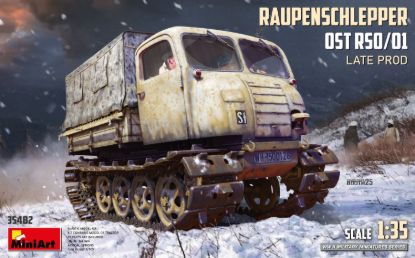
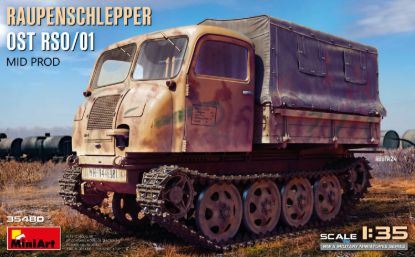
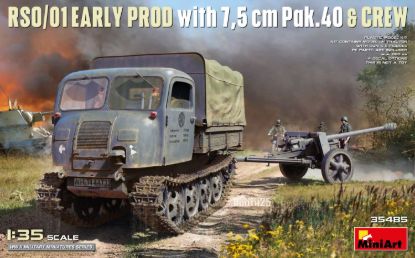
The Raupenschlepper Ost (RSO) was a fully tracked, lightweight vehicle developed by Germany during World War II. It was designed to address the mobility challenges faced by wheeled and half-tracked vehicles in the mud and snow of the Eastern Front. The RSO was a simple, robust, and lightweight tractor primarily used to tow light to medium artillery and for general transport of supplies and personnel. Its all-steel tracks and high ground clearance provided superior mobility in challenging terrain, making it an indispensable workhorse for German logistics in the East from 1942 until the end of the war.
The Raupenschlepper Ost (RSO) was a fully tracked, lightweight vehicle developed by Germany during World War II. It was designed to address the mobility challenges faced by wheeled and half-tracked vehicles in the mud and snow of the Eastern Front. The RSO was a simple, robust, and lightweight tractor primarily used to tow light to medium artillery and for general transport of supplies and personnel. Its all-steel tracks and high ground clearance provided superior mobility in challenging terrain, making it an indispensable workhorse for German logistics in the East from 1942 until the end of the war.
The Raupenschlepper Ost (RSO) was a fully tracked, lightweight vehicle developed by Germany during World War II. It was designed to address the mobility challenges faced by wheeled and half-tracked vehicles in the mud and snow of the Eastern Front. The RSO was a simple, robust, and lightweight tractor primarily used to tow light to medium artillery and for general transport of supplies and personnel. Its all-steel tracks and high ground clearance provided superior mobility in challenging terrain, making it an indispensable workhorse for German logistics in the East from 1942 until the end of the war.
The Krupp Protze (Kfz.70 - Standard configuration for personnel carrying) was a six-wheeled 6×4 German truck and artillery tractor produced between 1934 and 1941 and heavily used in World War II. It was powered by a 4-cylinder, 55 hp or, from 1936, 60 hp Krupp M 304 petrol engine. Its main purpose was to tow artillery, especially the 3.7 cm Pak 36 anti-tank gun (designated Kfz 69), and transport motorized infantry (designated Kfz 70).
The Sd.Kfz. 1 Type 170 VK, also known as the Mercedes-Benz 170 VK, was a military vehicle adapted from the civilian 170V model. It was designed for military use, featuring a tough frame, flat surfaces, and off-road tires, making it suitable for rough terrain.
The Mercedes-Benz 170 VK exemplified the German Wehrmacht’s need for rugged, adaptable support vehicles during WWII. Its design balanced civilian comfort with military necessity, and its simplicity made it reliable in the field. Though not heavily armored or armed, some versions featured field adjustments or were used as staff cars. Though they were typically assigned to logistics units, signals detachments, and officer transportation roles.
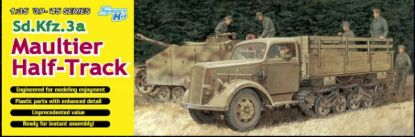
Maultier or Sd.Kfz. 3 is the name given to series of half-track trucks used by Nazi Germany during World War II. They were based on Opel, Mercedes-Benz, Alfa Romeo or Ford trucks. The vehicles were built by Opel at the Klöckner-Humboldt-Deutz AG and also in France in the Ford factory in Asnieres. In 1942 a total of 635 vehicles were produced, 1943 there were 13,000 and 1944 only 7,310.
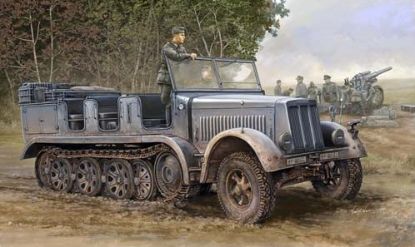
The Sd.Kfz. 7 was a half-track military vehicle used by the German Army, Luftwaffe and Waffen-SS during the Second World War. Sd.Kfz. is an abbreviation of the German word Sonderkraftfahrzeug, "special purpose vehicle". A longer designation is mittlerer Zugkraftwagen 8t, Sd.Kfz. 7, "medium towing motor vehicle 8t".
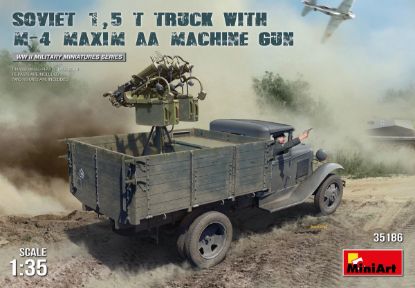
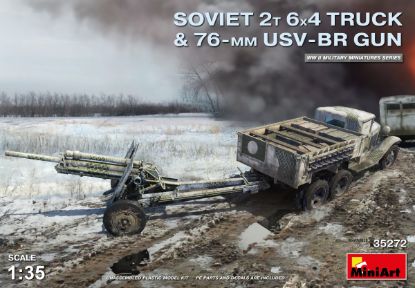
The GAZ AA truck played a crucial role in the Soviet military during the 1930s and World War II. It was the backbone of Soviet civilian and military logistics, serving in both army and national economy.
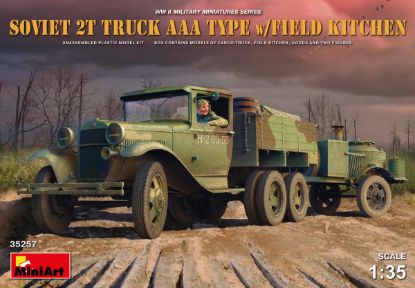
The GAZ-AAA was a significant vehicle in the Soviet military history, serving as a backbone for Red Army transportation during World War II. It was used in various roles, including as a mobile air-defense system, anti-aircraft unit, and even as infantry support.