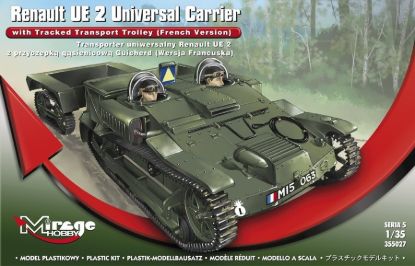
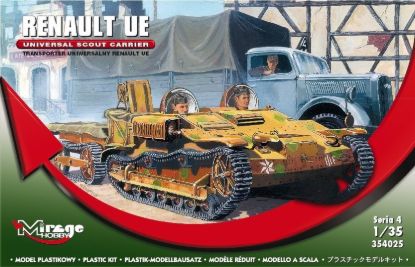
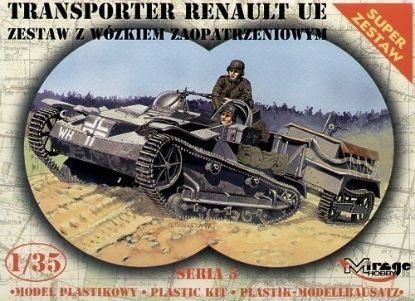
The Renault UE(f) Munitionsschlepper played a crucial role in the military operations of both France and Germany during World War II, showcasing the versatility and adaptability of military vehicles in the face of changing battlefield conditions.
The Renault UE(f) Munitionsschlepper played a crucial role in the military operations of both France and Germany during World War II, showcasing the versatility and adaptability of military vehicles in the face of changing battlefield conditions.
The Renault UE(f) Munitionsschlepper played a crucial role in the military operations of both France and Germany during World War II, showcasing the versatility and adaptability of military vehicles in the face of changing battlefield conditions.
The Renault UE(f) Munitionsschlepper played a crucial role in the military operations of both France and Germany during World War II, showcasing the versatility and adaptability of military vehicles in the face of changing battlefield conditions.
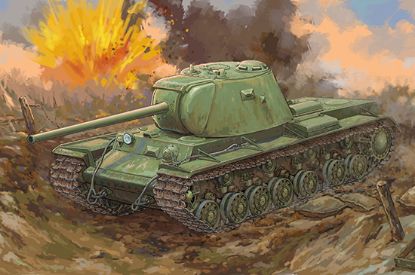
The KV-3 (Object 223) was an experimental Soviet heavy tank developed in 1941, based on the KV-220. It was designed to improve armor protection and firepower to counter new threats, including German tanks and anti-tank guns.
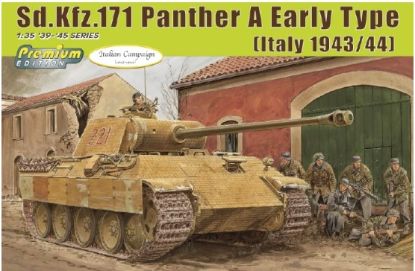
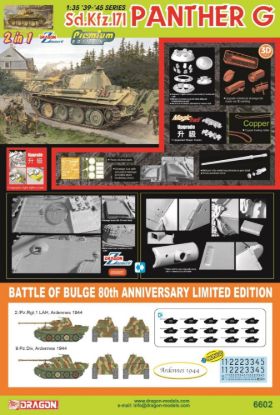
The Panther tank, officially Panzerkampfwagen V Panther (abbreviated Pz.Kpfw. V) with ordnance inventory designation: Sd.Kfz. 171, is a German medium tank of World War II. It was used in most European theatres of World War II from mid-1943 to the end of the war in May 1945.
The Panther tank, officially Panzerkampfwagen V Panther (abbreviated Pz.Kpfw. V) with ordnance inventory designation: Sd.Kfz. 171, is a German medium tank of World War II. It was used in most European theatres of World War II from mid-1943 to the end of the war in May 1945.
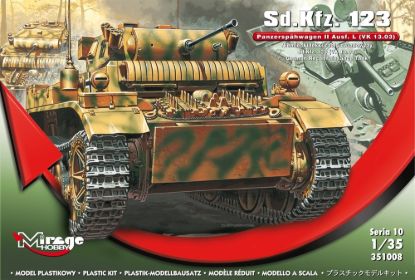
The Panzerkampfwagen II Ausf. L "Luchs" (German for lynx) is a German light tank from the Second World War, developed between 1940 and 1942 by Daimler-Benz and MAN. The Luchs was the only Panzer II design with the Schachtellaufwerk overlapping/interleaved road wheels and "slack track" configuration to enter series production, with 100 being built from September 1943 to January 1944 in addition to the conversion of the four Ausf. M tanks. Originally given the experimental designation VK 13.03, it was adopted under the alternate name Panzerspähwagen II and given the popular name Luchs.
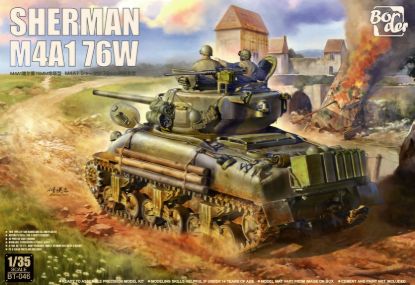
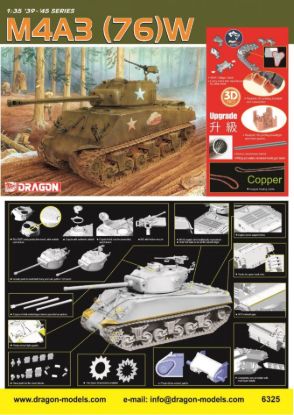
The M4 Sherman, officially Medium Tank, M4, was the medium tank most widely used by the United States and Western Allies in World War II. The M4 Sherman proved to be reliable, relatively cheap to produce, and available in great numbers. It was also the basis of several other armored fighting vehicles including self-propelled artillery, tank destroyers, and armored recovery vehicles.
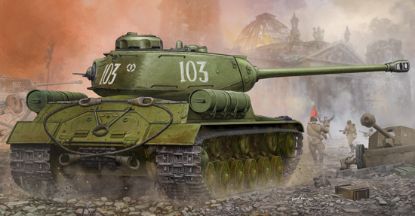
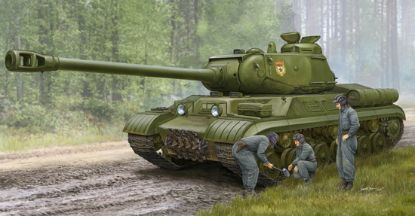
The JS-2's military history is marked by its effectiveness in combat against German Panther tanks, showcasing its capabilities and the legacy it left behind. Its design and performance set a precedent for Soviet tank development doctrine for decades to come.
In 1957 the Soviets upgraded the pre-existing IS-2 tanks (although received IS-2M index only in 1960) with new hull sides with integrated stowage boxes, T-10M tracks and roadwheels, machine gun in turret rear replaced by ventilation fan and many other minor technical improvements.
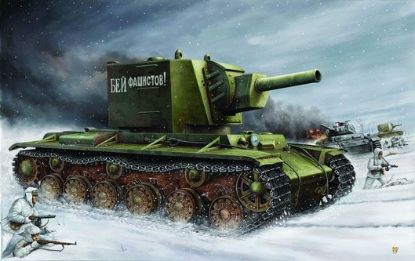
The KV-2, also known as the Kliment Voroshilov heavy tank, was developed during World War II as a heavy tank designed to provide heavy firepower and strong armor support for infantry and other tanks.
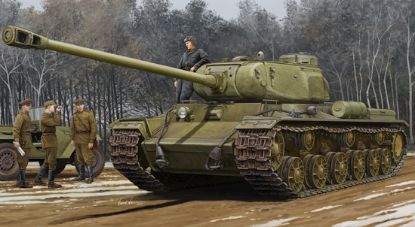
The development of the KV-122 was driven by the evolution of threats on the Eastern Front: after the Battle of Kursk, German tank divisions received King Tigers with frontal armor up to 180 mm thick, making the KV-85's 85 mm guns ineffective at ranges beyond 500 meters.
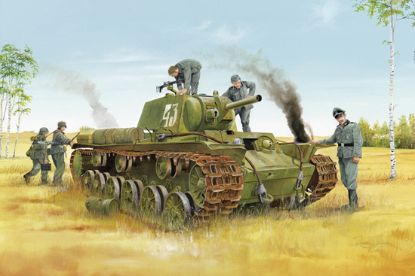
KV-8 built on a KV-1 Model 1942 hull with the angular rear hull overhang, and mounting a 45mm gun and ATO-41 flame projector in an up-armored welded turret. The KV-8 and KV-8S (based on the KV-1S tank) were used by Russians in all fronts of WWII.

![Picture of RENAULT UE [scout tankette – 2 versions of model]](https://www.afvhobbyhub.com/images/thumbs/0023100_renault-ue-scout-tankette-2-versions-of-model_415.jpeg "Show details for RENAULT UE [scout tankette – 2 versions of model]")