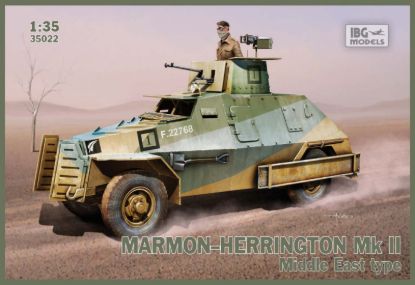
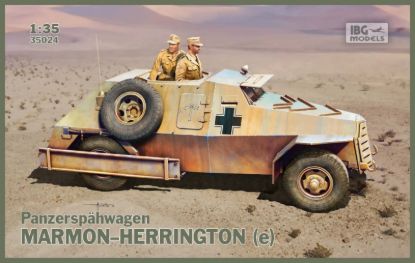
The Marmon–Herrington armoured car was a series of armoured vehicles that were produced in South Africa and adopted by the British Army during World War II.
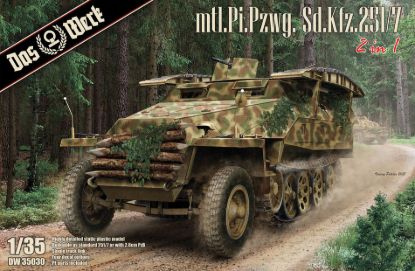
This vehicle was a familiar sight, widely associated with the German infantry during all of World War Two. It began simply as an armored version of the Sd.Kfz.11 half-tracked artillery tractor. The half-track was one of the several solutions given to the problem of low off-road capabilities of trucks and associated “special purpose vehicles” (Sonderkraftfahrzeug). The Sd.Kfz.11 was designed in 1938 by Hanomag and was the prime mover for the 105 mm (4.13 in) LeFH howitzer and 37 mm (1.46 in) Flak 43, and 9000 units were built until 1945. This company was the natural choice to fulfill the next Waffenamt specification, which requested an armored vehicle capable of carrying a section of Panzergrenadiers and their equipment in order to keep up with the Panzer Divisions. Each German mechanized infantry corps was to be equipped with a hundred of these. The protection given had to be sufficient against small arms fire and artillery shrapnel, and armament should comprise two MG 34 machine-guns for defense and direct support. In German nomenclature it was classed as a Mittlere Schützenpanzerwagen (“Medium Assault Armored Vehicle”).
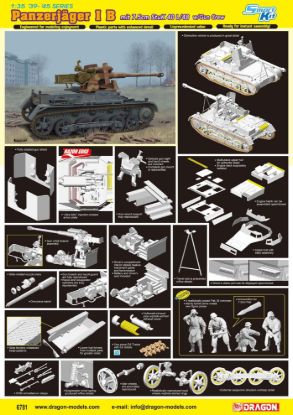
The Panzerjäger I was the very first tank hunter in German service. In 1939, as new medium tanks were entering mass production, older Panzer Is were already considered obsolescent. Many such chassis were available, which were perfect for being converted into self-propelled guns. One such idea came from the experience of the Polish campaign, were many Panzers were destroyed by the tiny, but efficient Polish TKS, using light antitank guns, like the Reinmetall Solothurn 20 mm (0.79 in). The capture of the Czech war industry also provided many suitable antitank guns, like the excellent 47 mm (1.85 in), far better suited than the average 37 mm (1.46 in) KwK 36, provided in large numbers to the German infantry at the time . The idea of mounting the Škoda 4.7 cm (1.85 in) cm PaK(t) on a Panzer I Ausf.B chassis was meant to quickly provide a potent way to deal with French tanks, especially SOMUA and B1, for the upcoming Western campaign.
German capture version of the Marmon–Herrington armoured car; a series of armoured vehicles that were produced in South Africa and adopted by the British Army during World War II.
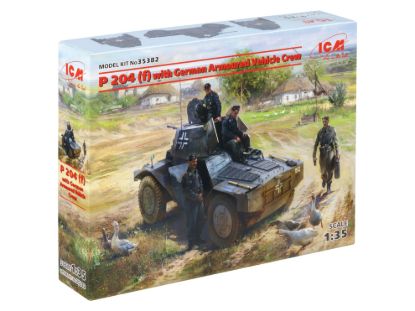
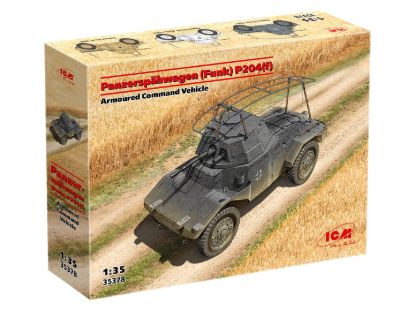
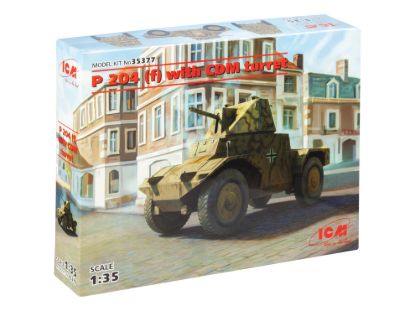
The Panzerspähwagen (Funk) P204(f) was a German command radio-equipped armored car based on the captured French Panhard 178. Command variants of the P204(f) used FuG 10 or FuG 11 radios, and the large Hochantenne (elevated) frame antenna, with some vehicles also fitted with a right-side telescopic mast. The Germans converted the P204(f) into a Funk vehicle by removing the APX3 turret and installing a fixed or open-topped armored box.
With the German invasion of France in May-June 1940, the French saw many of their vehicles abandoned by the side of roads because of lack of fuel or spare parts, or even of time to repair or refuel their vehicles before they would be overrun. These intact vehicles would be ripe for the taking for German forces, and there are indeed occasional reports of captured Panhard 178s, as well as other vehicles, such as the Renault UE, being fielded by German forces during the Campaign of France itself. The Panhard 178 was the only vehicle Vichy France was allowed to keep in service in mainland France by the terms of the armistice. A total of 64 vehicles, with the 25 mm gun replaced by another 7.5 mm machine gun, were approved under these conditions. In addition, there were at least 45 uncompleted hulls which were hidden away from the Germans and were later used for the Panhard 178 CDM conversions.
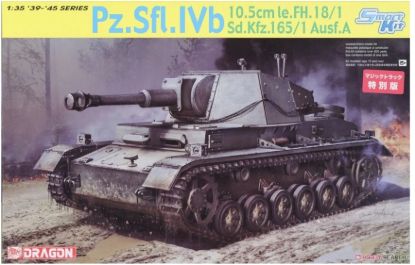
The full designation of this self-propelled artillery gun was Panzerfeldhaubitze 18M auf Geschützwagen III/IV (Sf) Hummel, Sd.Kfz.165.The German word ‘Hummel’ means bumblebee. This armored fighting vehicle had a nasty sting. There were two main types of self-propelled guns in the German Army during WW2. One was fitted with an anti-tank gun and the other with an artillery howitzer, like the Hummel. A vehicle fitted with an artillery field howitzer was called a ‘Geschützwagen’, which is literally translated as a ‘gun vehicle’. The letters ‘Sf’ stand for ‘Selbstfahrlafette’ – self-propelled carriage. ‘Panzerfeldhaubitze’ means armoured field howitzer.
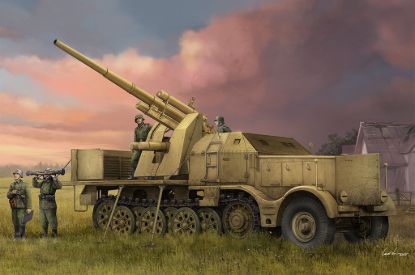
8.8 cm Flak 18 anti-aircraft guns were mounted on fifteen Sd.Kfz. 9s in 1940 as the 8.8 cm Flak 18 (Sfl.) auf Zugkraftwagen 18t (Sd.Kfz. 9) for anti-tank duties. The crew and engine compartments were lightly (14.5 mm (0.57 in)), but completely, armored, which limited the gun's ability to fire directly ahead. A platform with drop-down sides was fitted for the gun. Outriggers were necessary to brace the platform sides to support the weight of the gun crew.
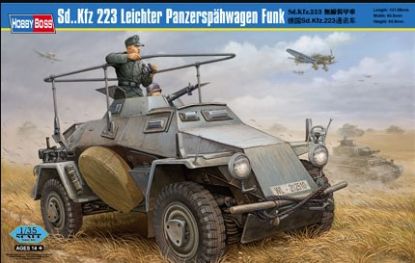
The Sd.Kfz. 223 was Command and Communications vehicle, distinguished by its large collapsible aerial antenna frame above the gun emplacement. It featured a crew of three, including a driver, commander, and machine gunner. The Sd.Kfz. 223 was produced in 567 units from 1936 to January 1944, benefiting from its dedicated armored chassis and Horch V8 gasoline engine for cross-country travel. The vehicle's design was closely related to the Sd.Kfz. 221, with a stepped rear upper hull section and a tapered hatch covering the engine compartment. The Sd.Kfz. 223 was used for reconnaissance and communications missions, with its light armor protection and 4x4 wheeled design providing it with the necessary strength for military service.
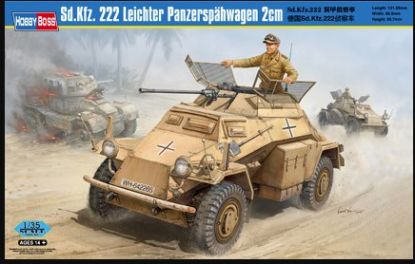
The Sd.Kfz. 222's development and deployment were marked by its success in early campaigns against unprepared opponents, but it faced significant vulnerabilities when confronting well-equipped Allied forces. The vehicle's armor-piercing vulnerability was discovered during tests, leading to its eventual replacement by the Sd.Kfz. 234 Puma. The Sd.Kfz. 222's history is a testament to the complexities of armored vehicle development and the impact of engineering compromises on battlefield performance.
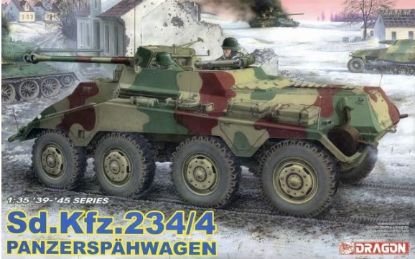
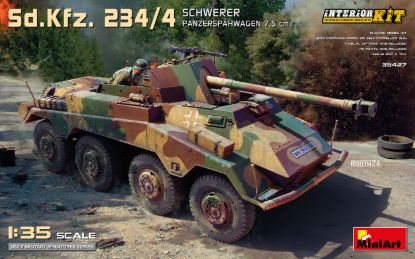
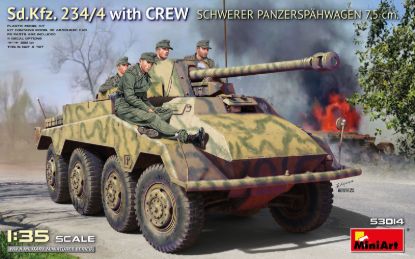
The SdKfz 234 Puma was a German eight-wheeled heavy armored car developed during World War II. After it was clear that a stronger armament was necessary to fight the Soviet tank units, the SdKfz 234/3 with a short 7.5 cm gun and then the SdKfz 234/4 with a long 7.5 cm Pak 40, which were rigidly mounted to the front in an open top stand, appeared. The Puma was primarily designed for reconnaissance missions, but its firepower (especially in the 234/2 variant) made it capable of engaging enemy light armor. Its excellent mobility and range allowed it to operate effectively behind enemy lines. The SdKfz 234 series represented the pinnacle of German armored car design during WWII, combining mobility, firepower, and reasonable protection. The diesel engine provided superior range compared to most contemporary vehicles.
The SdKfz 234 Puma was a German eight-wheeled heavy armored car developed during World War II. After it was clear that a stronger armament was necessary to fight the Soviet tank units, the SdKfz 234/3 with a short 7.5 cm gun and then the SdKfz 234/4 with a long 7.5 cm Pak 40, which were rigidly mounted to the front in an open top stand, appeared. The Puma was primarily designed for reconnaissance missions, but its firepower (especially in the 234/2 variant) made it capable of engaging enemy light armor. Its excellent mobility and range allowed it to operate effectively behind enemy lines. The SdKfz 234 series represented the pinnacle of German armored car design during WWII, combining mobility, firepower, and reasonable protection. The diesel engine provided superior range compared to most contemporary vehicles.
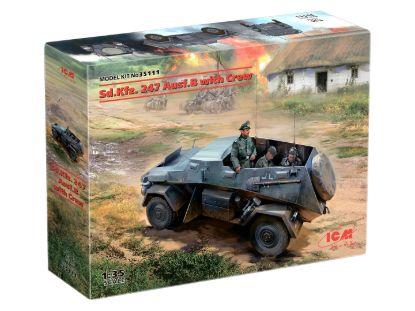
The Sd.Kfz. 247 Ausf.B was an armored command car used by the German armed forces during World War II. It was a four-wheeled model that entered production during the war, providing a mobile platform for senior German officers to travel safely across rough terrain. The Ausf.B was largely deployed on the Russian front and possibly in Normandy in 1944.
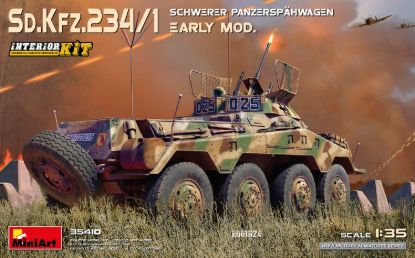
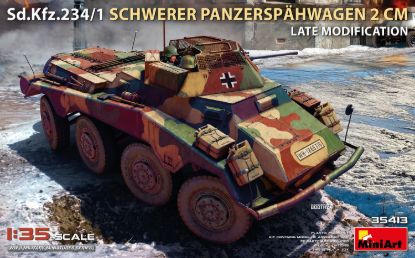
The SdKfz 234 Puma was a German eight-wheeled heavy armored car developed during World War II. The basic model was the command armored car SdKfz 234/1 with an open top, fully rotatable hexagonal turret with 2 cm quick-fire cannon. The Puma was primarily designed for reconnaissance missions, but its firepower (especially in the 234/2 variant) made it capable of engaging enemy light armor. Its excellent mobility and range allowed it to operate effectively behind enemy lines. The SdKfz 234 series represented the pinnacle of German armored car design during WWII, combining mobility, firepower, and reasonable protection. The diesel engine provided superior range compared to most contemporary vehicles.
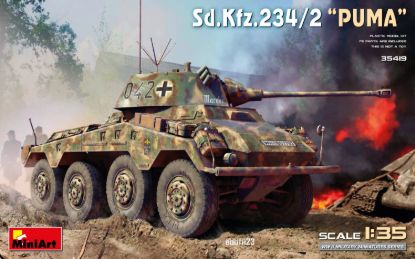
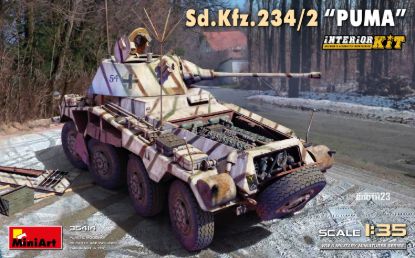
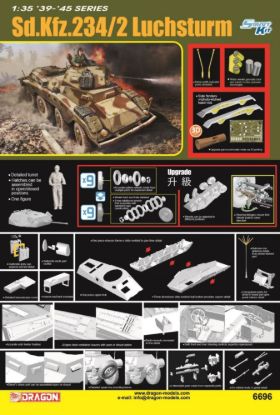
The SdKfz 234 Puma was a German eight-wheeled heavy armored car developed during World War II. The Puma was the SdKfz 234/2 with a turret shaped like a horse’s hoof from above with 5-cm-cannon was originally developed for the never put into service light main battle tank Leopard. The Puma was primarily designed for reconnaissance missions, but its firepower (especially in the 234/2 variant) made it capable of engaging enemy light armor. Its excellent mobility and range allowed it to operate effectively behind enemy lines. The SdKfz 234 series represented the pinnacle of German armored car design during WWII, combining mobility, firepower, and reasonable protection. The diesel engine provided superior range compared to most contemporary vehicles.
The SdKfz 234 Puma was a German eight-wheeled heavy armored car developed during World War II. The Puma was the SdKfz 234/2 with a turret shaped like a horse’s hoof from above with 5-cm-cannon was originally developed for the never put into service light main battle tank Leopard. The Puma was primarily designed for reconnaissance missions, but its firepower (especially in the 234/2 variant) made it capable of engaging enemy light armor. Its excellent mobility and range allowed it to operate effectively behind enemy lines. The SdKfz 234 series represented the pinnacle of German armored car design during WWII, combining mobility, firepower, and reasonable protection. The diesel engine provided superior range compared to most contemporary vehicles.
The SdKfz 234 Puma was a German eight-wheeled heavy armored car developed during World War II. The basic model was the command armored car SdKfz 234/1 with an open top, fully rotatable hexagonal turret with 2 cm quick-fire cannon. The Puma was primarily designed for reconnaissance missions, but its firepower (especially in the 234/2 variant) made it capable of engaging enemy light armor. Its excellent mobility and range allowed it to operate effectively behind enemy lines. The SdKfz 234 series represented the pinnacle of German armored car design during WWII, combining mobility, firepower, and reasonable protection. The diesel engine provided superior range compared to most contemporary vehicles.