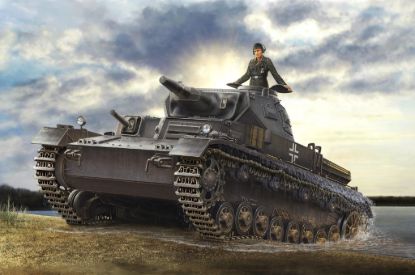
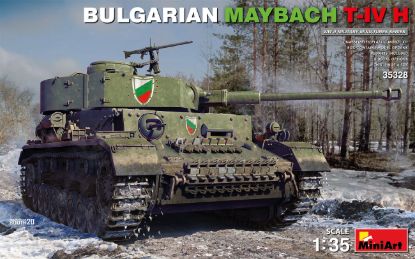
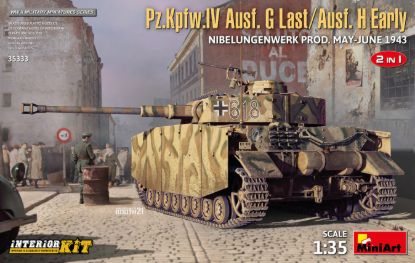
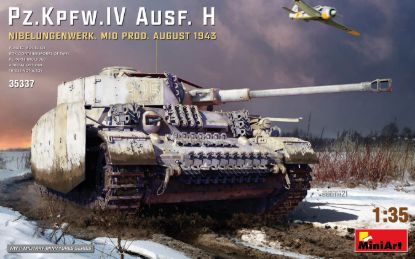
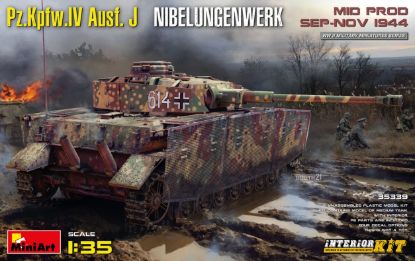
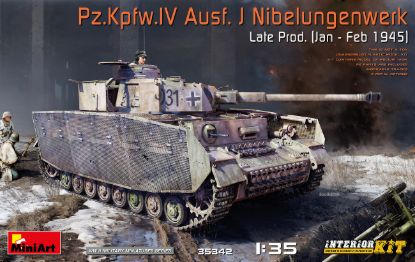
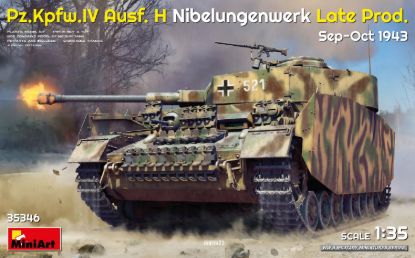
The Panzer IV was originally intended to be used only on a limited scale, so initially Krupp was its sole manufacturer. Prior to the Polish campaign, only 217 Panzer IVs had been produced: 35 Ausf. A; 42 Ausf. B; and 140 Ausf. C; in 1941, production was extended to Vogtländische Maschinenfabrik ("VOMAG") (located in the city of Plauen) and the Nibelungenwerk in the Austrian city of St. Valentin.
The Panzer IV was originally intended to be used only on a limited scale, so initially Krupp was its sole manufacturer. Prior to the Polish campaign, only 217 Panzer IVs had been produced: 35 Ausf. A; 42 Ausf. B; and 140 Ausf. C; in 1941, production was extended to Vogtländische Maschinenfabrik ("VOMAG") (located in the city of Plauen) and the Nibelungenwerk in the Austrian city of St. Valentin.
The Panzer IV was originally intended to be used only on a limited scale, so initially Krupp was its sole manufacturer. Prior to the Polish campaign, only 217 Panzer IVs had been produced: 35 Ausf. A; 42 Ausf. B; and 140 Ausf. C; in 1941, production was extended to Vogtländische Maschinenfabrik ("VOMAG") (located in the city of Plauen) and the Nibelungenwerk in the Austrian city of St. Valentin.
The Panzer IV was originally intended to be used only on a limited scale, so initially Krupp was its sole manufacturer. Prior to the Polish campaign, only 217 Panzer IVs had been produced: 35 Ausf. A; 42 Ausf. B; and 140 Ausf. C; in 1941, production was extended to Vogtländische Maschinenfabrik ("VOMAG") (located in the city of Plauen) and the Nibelungenwerk in the Austrian city of St. Valentin.
The Panzer IV was originally intended to be used only on a limited scale, so initially Krupp was its sole manufacturer. Prior to the Polish campaign, only 217 Panzer IVs had been produced: 35 Ausf. A; 42 Ausf. B; and 140 Ausf. C; in 1941, production was extended to Vogtländische Maschinenfabrik ("VOMAG") (located in the city of Plauen) and the Nibelungenwerk in the Austrian city of St. Valentin.
The Panzer IV was originally intended to be used only on a limited scale, so initially Krupp was its sole manufacturer. Prior to the Polish campaign, only 217 Panzer IVs had been produced: 35 Ausf. A; 42 Ausf. B; and 140 Ausf. C; in 1941, production was extended to Vogtländische Maschinenfabrik ("VOMAG") (located in the city of Plauen) and the Nibelungenwerk in the Austrian city of St. Valentin.
The Panzer IV was originally intended to be used only on a limited scale, so initially Krupp was its sole manufacturer. Prior to the Polish campaign, only 217 Panzer IVs had been produced: 35 Ausf. A; 42 Ausf. B; and 140 Ausf. C; in 1941, production was extended to Vogtländische Maschinenfabrik ("VOMAG") (located in the city of Plauen) and the Nibelungenwerk in the Austrian city of St. Valentin.
The Panzer IV was originally intended to be used only on a limited scale, so initially Krupp was its sole manufacturer. Prior to the Polish campaign, only 217 Panzer IVs had been produced: 35 Ausf. A; 42 Ausf. B; and 140 Ausf. C; in 1941, production was extended to Vogtländische Maschinenfabrik ("VOMAG") (located in the city of Plauen) and the Nibelungenwerk in the Austrian city of St. Valentin.
The Panzer IV was originally intended to be used only on a limited scale, so initially Krupp was its sole manufacturer. Prior to the Polish campaign, only 217 Panzer IVs had been produced: 35 Ausf. A; 42 Ausf. B; and 140 Ausf. C; in 1941, production was extended to Vogtländische Maschinenfabrik ("VOMAG") (located in the city of Plauen) and the Nibelungenwerk in the Austrian city of St. Valentin.
The Panzer IV was originally intended to be used only on a limited scale, so initially Krupp was its sole manufacturer. Prior to the Polish campaign, only 217 Panzer IVs had been produced: 35 Ausf. A; 42 Ausf. B; and 140 Ausf. C; in 1941, production was extended to Vogtländische Maschinenfabrik ("VOMAG") (located in the city of Plauen) and the Nibelungenwerk in the Austrian city of St. Valentin.
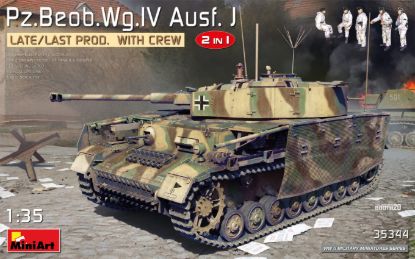
The Panzerbeobachtungswagen IV (Pz. Beob. Wg. IV) was an artillery observation vehicle built on the Panzer IV chassis. This, too, received new radio equipment and an electrical generator, installed in the left rear corner of the fighting compartment. Panzerbeobachtungswagen worked in cooperation with Wespe and Hummel self-propelled artillery batteries.
The Panzer IV was originally intended to be used only on a limited scale, so initially Krupp was its sole manufacturer. Prior to the Polish campaign, only 217 Panzer IVs had been produced: 35 Ausf. A; 42 Ausf. B; and 140 Ausf. C; in 1941, production was extended to Vogtländische Maschinenfabrik ("VOMAG") (located in the city of Plauen) and the Nibelungenwerk in the Austrian city of St. Valentin.