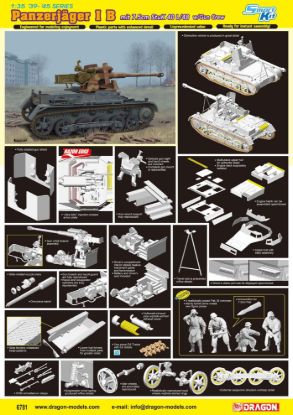
The Panzerjäger I was the very first tank hunter in German service. In 1939, as new medium tanks were entering mass production, older Panzer Is were already considered obsolescent. Many such chassis were available, which were perfect for being converted into self-propelled guns. One such idea came from the experience of the Polish campaign, were many Panzers were destroyed by the tiny, but efficient Polish TKS, using light antitank guns, like the Reinmetall Solothurn 20 mm (0.79 in). The capture of the Czech war industry also provided many suitable antitank guns, like the excellent 47 mm (1.85 in), far better suited than the average 37 mm (1.46 in) KwK 36, provided in large numbers to the German infantry at the time . The idea of mounting the Škoda 4.7 cm (1.85 in) cm PaK(t) on a Panzer I Ausf.B chassis was meant to quickly provide a potent way to deal with French tanks, especially SOMUA and B1, for the upcoming Western campaign.
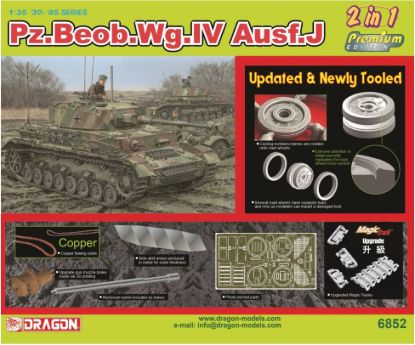
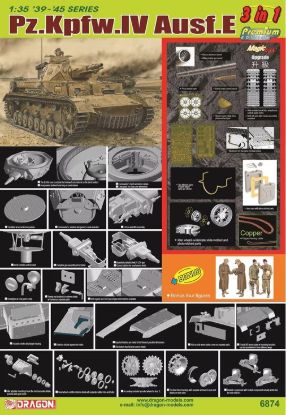
The Sd.Kfz. 161, also known as the Panzer IV, was a medium tank developed in Nazi Germany in the late 1930s and used extensively during World War II as well as later wars. It was the most numerous German tank and the second-most numerous German fully tracked armored fighting vehicle of the war, with 8,553 units produced. The Panzer IV was initially designed for infantry support but evolved to become the primary tank for German forces due to its ability to engage enemy armor effectively. It was the only German tank to remain in continuous production throughout the war, with over 8,800 units produced between 1936 and 1945.
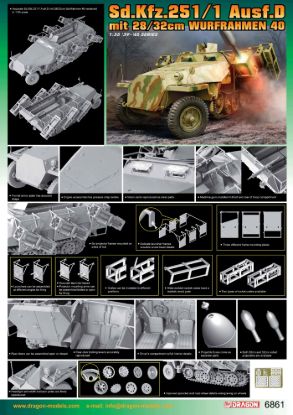
The Sd.Kfz.251/1 II mittlerer Schützenpanzerwagen mit Wurfrahmen, was a heavy rocket launcher platform (also dubbed “Stuka zum Fuss”), equipped with six massive 28cm Sprengranate (HE rounds) or 32cm Flammgranate (incendiary rounds), the latter using napalm. They were called Wurfrahmen 40, and had a range of 1.9 and 2.2 km, respectively. First ordered in late 1940, these Wurfkoerper rocket launching vehicles only appeared by 1943-44 in limited numbers.
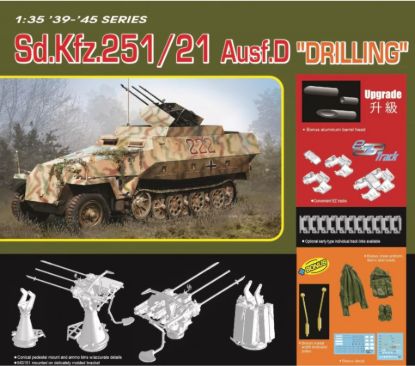
The SdKfz 251/21, also known as the Mittlerer Schutzenpanzerwagen - Drilling MG 151, was a very effective production anti-aircraft version of the SdKfz 251 halftrack. Mounted with three excellent 15mm MG 151/15 or 20mm MG 151/20 machine guns on a compact pedestal behind a small armored shield, having a rate of 700 rounds per minute per gun, these modified SdKfz251 halftracks could provide very effective defensive fire against the Allied aircraft.
The Sd.Kfz. 161, also known as the Panzer IV, was a medium tank developed in Nazi Germany in the late 1930s and used extensively during World War II as well as later wars. It was the most numerous German tank and the second-most numerous German fully tracked armored fighting vehicle of the war, with 8,553 units produced. The Panzer IV was initially designed for infantry support but evolved to become the primary tank for German forces due to its ability to engage enemy armor effectively. It was the only German tank to remain in continuous production throughout the war, with over 8,800 units produced between 1936 and 1945.