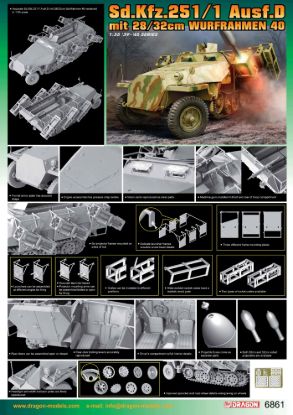
The Sd.Kfz.251/1 II mittlerer Schützenpanzerwagen mit Wurfrahmen, was a heavy rocket launcher platform (also dubbed “Stuka zum Fuss”), equipped with six massive 28cm Sprengranate (HE rounds) or 32cm Flammgranate (incendiary rounds), the latter using napalm. They were called Wurfrahmen 40, and had a range of 1.9 and 2.2 km, respectively. First ordered in late 1940, these Wurfkoerper rocket launching vehicles only appeared by 1943-44 in limited numbers.
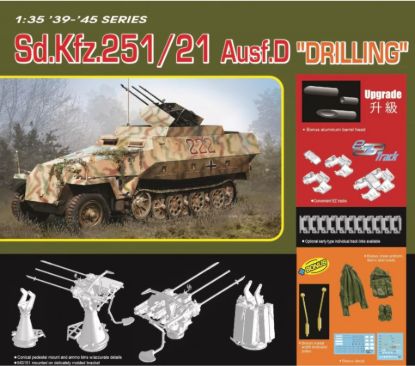
The SdKfz 251/21, also known as the Mittlerer Schutzenpanzerwagen - Drilling MG 151, was a very effective production anti-aircraft version of the SdKfz 251 halftrack. Mounted with three excellent 15mm MG 151/15 or 20mm MG 151/20 machine guns on a compact pedestal behind a small armored shield, having a rate of 700 rounds per minute per gun, these modified SdKfz251 halftracks could provide very effective defensive fire against the Allied aircraft.
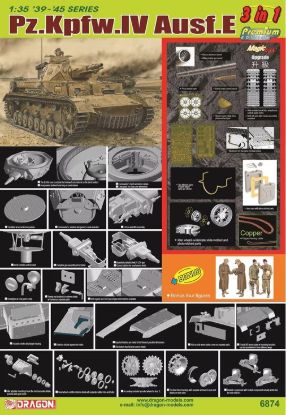
The Sd.Kfz. 161, also known as the Panzer IV, was a medium tank developed in Nazi Germany in the late 1930s and used extensively during World War II as well as later wars. It was the most numerous German tank and the second-most numerous German fully tracked armored fighting vehicle of the war, with 8,553 units produced. The Panzer IV was initially designed for infantry support but evolved to become the primary tank for German forces due to its ability to engage enemy armor effectively. It was the only German tank to remain in continuous production throughout the war, with over 8,800 units produced between 1936 and 1945.
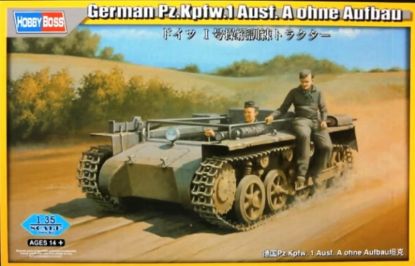
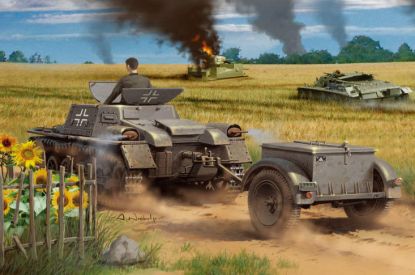
The Sd.Kfz.111, also known as the gepanzerte Munitionsschlepper, was a military vehicle used by Nazi Germany during World War II. It was primarily based on the chassis of the Panzerkampfwagen I M.G. Sd. Kfz. 101 Ausf. A and was designed to transport ammunition. The vehicle was created by removing the turret and adding a simple open-topped box body. It was intended for units equipped with the 7.62 cm Pak 36 (r) ammunition. The Sd.Kfz.111 was converted from 50 vehicles, with additional contracts for conversion reported by DEW, leading to a total of 122 vehicles converted by the end of the war.
The Sd.Kfz.111, also known as the gepanzerte Munitionsschlepper, was a military vehicle used by Nazi Germany during World War II. It was primarily based on the chassis of the Panzerkampfwagen I M.G. Sd. Kfz. 101 Ausf. A and was designed to transport ammunition. The vehicle was created by removing the turret and adding a simple open-topped box body. It was intended for units equipped with the 7.62 cm Pak 36 (r) ammunition. The Sd.Kfz.111 was converted from 50 vehicles, with additional contracts for conversion reported by DEW, leading to a total of 122 vehicles converted by the end of the war.
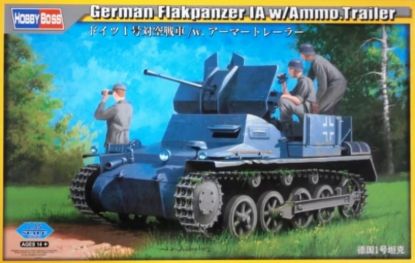
The Panzer I saw combat in the Spanish Civil War and WWII. The Panzer I's design history can be traced to the British Carden Loyd tankette, of which it borrowed much of its track and suspension design.
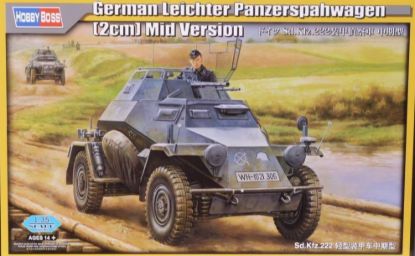
The Sd.Kfz. 222's development and deployment were marked by its success in early campaigns against unprepared opponents, but it faced significant vulnerabilities when confronting well-equipped Allied forces. The vehicle's armor-piercing vulnerability was discovered during tests, leading to its eventual replacement by the Sd.Kfz. 234 Puma. The Sd.Kfz. 222's history is a testament to the complexities of armored vehicle development and the impact of engineering compromises on battlefield performance.
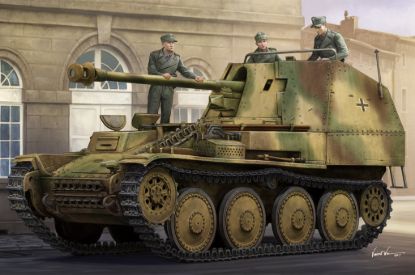
The Marder III, specifically, was equipped with the German 7.5 cm PaK 40 anti-tank gun, which was highly effective in penetrating the armor of most Allied tanks at standard engagement ranges. The Marder III served on all fronts until the end of the war, providing significant firepower to counter the thick-armored T-34s.
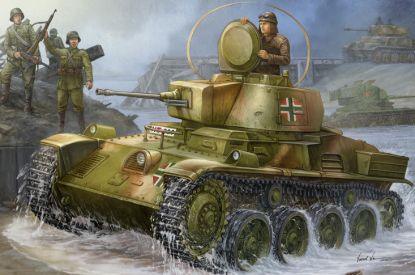
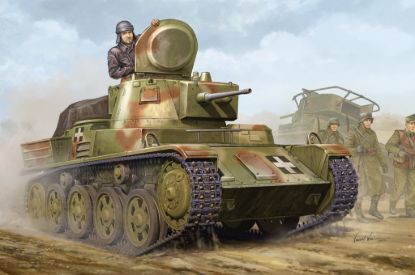
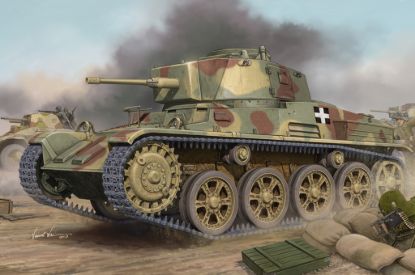
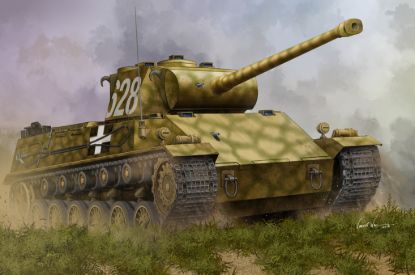
The Toldi was a Hungarian light tank of World War II, developed on the basis of the Swedish Landsverk L-60. It was named after the 14th century Hungarian knight Miklós Toldi. The Toldi was made in several different variants including some armed with a 20 mm gun, some armed with a 40 mm gun, some fitted with schürzen plates, and even a prototype tank destroyer variant armed with a 75 mm gun. At least one was even fitted with heavy anti-tank rocket launchers.
The Toldi was a Hungarian light tank of World War II, developed on the basis of the Swedish Landsverk L-60. It was named after the 14th century Hungarian knight Miklós Toldi. The Toldi was made in several different variants including some armed with a 20 mm gun, some armed with a 40 mm gun, some fitted with schürzen plates, and even a prototype tank destroyer variant armed with a 75 mm gun. At least one was even fitted with heavy anti-tank rocket launchers.
The Toldi was a Hungarian light tank of World War II, developed on the basis of the Swedish Landsverk L-60. It was named after the 14th century Hungarian knight Miklós Toldi. The Toldi was made in several different variants including some armed with a 20 mm gun, some armed with a 40 mm gun, some fitted with schürzen plates, and even a prototype tank destroyer variant armed with a 75 mm gun. At least one was even fitted with heavy anti-tank rocket launchers.
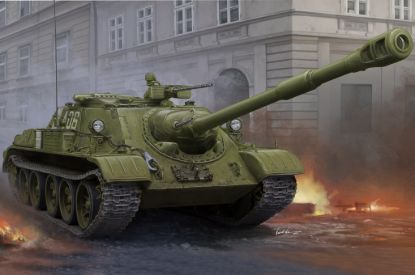
This elusive vehicle was rarely reported on in the West, and for some time its existence and many of the details surrounding it were unknown. Despite the secrecy surrounding it, however, the SU-122-54 was a very real vehicle that saw service, seeing use in some of the largest Soviet military actions of the 1960s. The SU-122-54 was developed, put into production, fielded, and retired, all whilst managing to remain largely a secret from NATO forces.
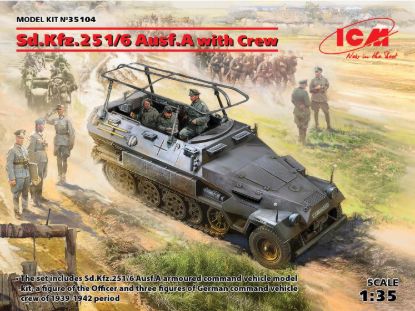
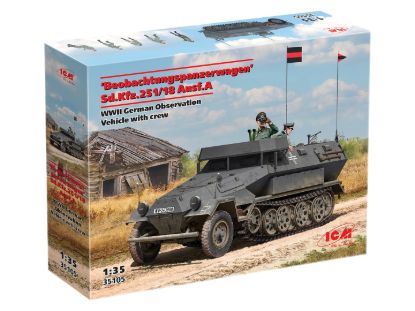
Sd.Kfz.251/6 – mittlere Funkpanzerwagen (Kommandopanzerwagen) - This early command and radio vehicle housed map boards, cipher and encoding machines in a rearranged compartment, based on Ausf.A/B versions.
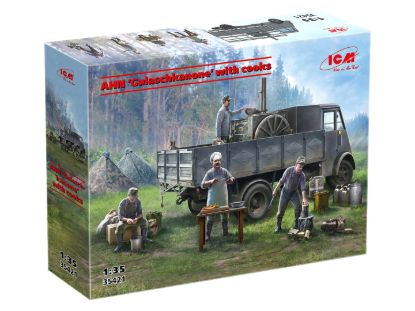
The AHN 'Gulaschkanone' was a significant part of the Wehrmacht's military history, playing a crucial role in sustaining the army's strength and morale during World War II. The field kitchens were essential for providing soldiers with hot meals, and their design and functionality were adapted to the needs of the German army. The Gulaschkanone, with its chimney resembling a cannon barrel, was a symbol of the average German soldier's life at the front. The kitchens were used in various forms, including horse-drawn and motorized, and were equipped with different cauldrons and storage compartments. The AHN 'Gulaschkanone' was a testament to the German army's commitment to providing food and comfort to its soldiers, even in the most austere conditions.
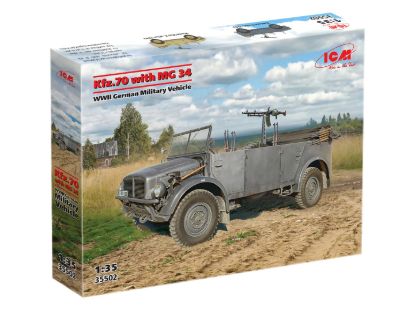
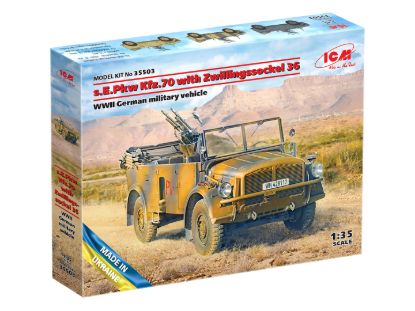
The Krupp Protze (Kfz.70 - Standard configuration for personnel carrying) was a six-wheeled 6×4 German truck and artillery tractor produced between 1934 and 1941 and heavily used in World War II. It was powered by a 4-cylinder, 55 hp or, from 1936, 60 hp Krupp M 304 petrol engine. Its main purpose was to tow artillery, especially the 3.7 cm Pak 36 anti-tank gun (designated Kfz 69), and transport motorized infantry (designated Kfz 70).
The Krupp Protze (Kfz.70 - Standard configuration for personnel carrying) was a six-wheeled 6×4 German truck and artillery tractor produced between 1934 and 1941 and heavily used in World War II. It was powered by a 4-cylinder, 55 hp or, from 1936, 60 hp Krupp M 304 petrol engine. Its main purpose was to tow artillery, especially the 3.7 cm Pak 36 anti-tank gun (designated Kfz 69), and transport motorized infantry (designated Kfz 70).