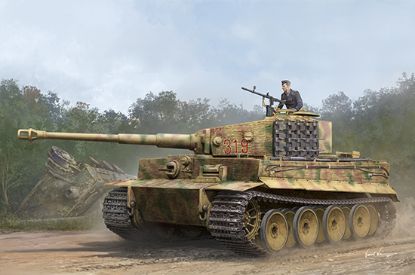
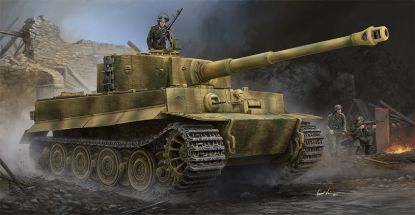
From the early days of combat against this tank in WW2 until the present day, the fame of the Tiger spans, in equal amounts, its real development history, combat performance, and fandom. It is a tank with many flaws and one whose mystique, even back in WW2, was out of all proportion to its utility and service as a combat vehicle. Yet, despite its flaws and problems, the tank remains a potent symbol of WW2 and, for many, it is the tank which served as their introduction to the world of armored fighting vehicles.
From the early days of combat against this tank in WW2 until the present day, the fame of the Tiger spans, in equal amounts, its real development history, combat performance, and fandom. It is a tank with many flaws and one whose mystique, even back in WW2, was out of all proportion to its utility and service as a combat vehicle. Yet, despite its flaws and problems, the tank remains a potent symbol of WW2 and, for many, it is the tank which served as their introduction to the world of armored fighting vehicles.
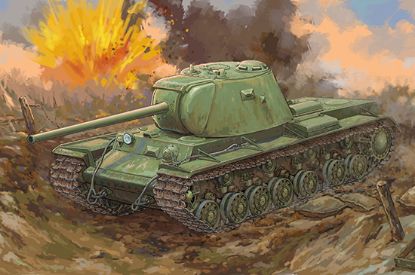
The KV-3 (Object 223) was an experimental Soviet heavy tank developed in 1941, based on the KV-220. It was designed to improve armor protection and firepower to counter new threats, including German tanks and anti-tank guns.
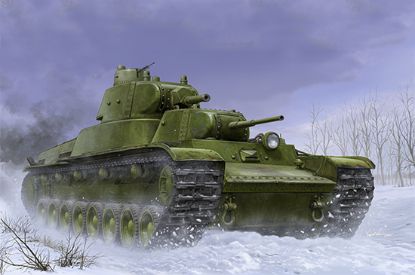
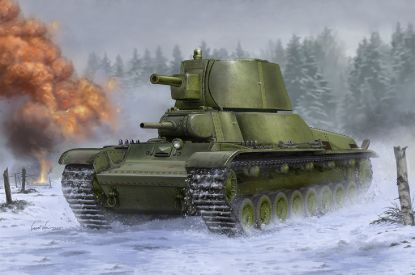
The T-100 tank was a Soviet heavy tank prototype designed in 1938-39 as a potential replacement for the T-35. It was developed by the OKMO design team at the S.M. Kirov Factory No. 185 in Leningrad.
The T-100Z tank, also known as the SU-100Y, was a self-propelled gun was a twin-turreted Soviet heavy tank designed in 1938-39, intended to replace the aging T-35 tank. The SU-100Y was used in the defense of Moscow in 1941.