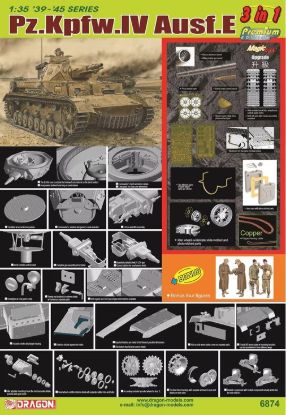
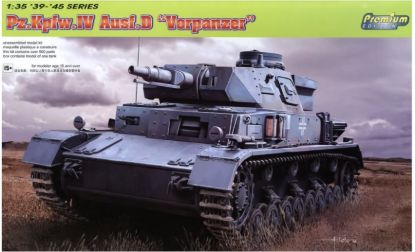
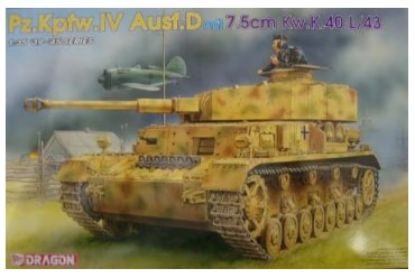
The Sd.Kfz. 161, also known as the Panzer IV, was a medium tank developed in Nazi Germany in the late 1930s and used extensively during World War II as well as later wars. It was the most numerous German tank and the second-most numerous German fully tracked armored fighting vehicle of the war, with 8,553 units produced. The Panzer IV was initially designed for infantry support but evolved to become the primary tank for German forces due to its ability to engage enemy armor effectively. It was the only German tank to remain in continuous production throughout the war, with over 8,800 units produced between 1936 and 1945.
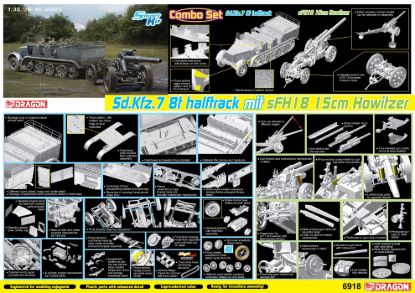
The Sd.Kfz. 7 was a half-track military vehicle used by the German Army, Luftwaffe and Waffen-SS during the Second World War. Sd.Kfz. is an abbreviation of the German word Sonderkraftfahrzeug, "special purpose vehicle". A longer designation is mittlerer Zugkraftwagen 8t, Sd.Kfz. 7, "medium towing motor vehicle 8t".
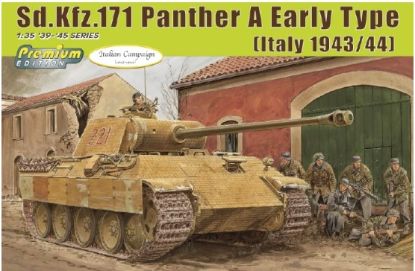
The Panther tank, officially Panzerkampfwagen V Panther (abbreviated Pz.Kpfw. V) with ordnance inventory designation: Sd.Kfz. 171, is a German medium tank of World War II. It was used in most European theatres of World War II from mid-1943 to the end of the war in May 1945.
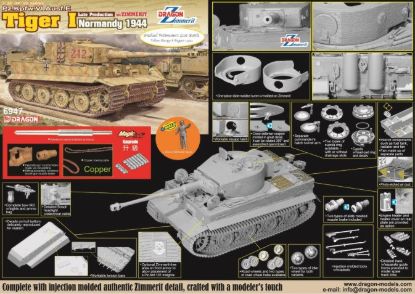
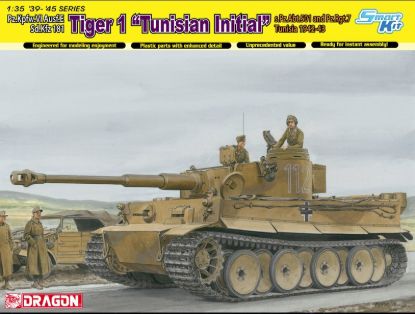
From the early days of combat against this tank in WW2 until the present day, the fame of the Tiger spans, in equal amounts, its real development history, combat performance, and fandom. It is a tank with many flaws and one whose mystique, even back in WW2, was out of all proportion to its utility and service as a combat vehicle. Yet, despite its flaws and problems, the tank remains a potent symbol of WW2 and, for many, it is the tank which served as their introduction to the world of armored fighting vehicles.
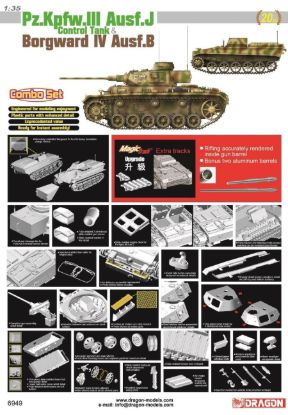
The Sd.Kfz. 141, also known as the Panzer III, was a medium tank developed by Germany in the 1930s. It was intended to engage other armored fighting vehicles and serve alongside the Panzer IV, which was designed for infantry support.
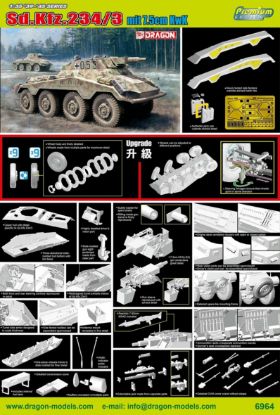
The SdKfz 234 Puma was a German eight-wheeled heavy armored car developed during World War II. After it was clear that a stronger armament was necessary to fight the Soviet tank units, the SdKfz 234/3 with a short 7.5 cm gun and then the SdKfz 234/4 with a long 7.5 cm Pak 40, which were rigidly mounted to the front in an open top stand, appeared. The Puma was primarily designed for reconnaissance missions, but its firepower (especially in the 234/2 variant) made it capable of engaging enemy light armor. Its excellent mobility and range allowed it to operate effectively behind enemy lines. The SdKfz 234 series represented the pinnacle of German armored car design during WWII, combining mobility, firepower, and reasonable protection. The diesel engine provided superior range compared to most contemporary vehicles.
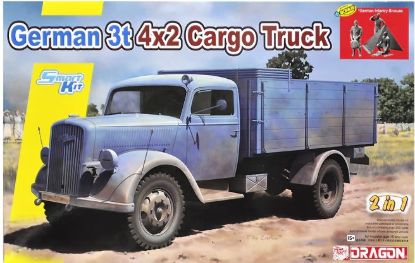
Opel Blitz (Blitz being German for "lightning") was the name given to various light and middleweight trucks built by the German Opel automobile manufacturer between 1930 and 1975.
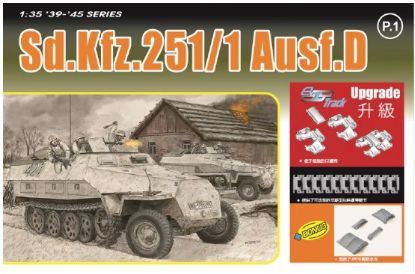
The Sd.Kfz. 251/1, also known as the mittlere Schützenpanzerwagen (IR) Falke, was the standard German personnel carrier and a significant vehicle in the military history of World War II. It was designed to transport a squad of Panzergrenadiers to the battlefield, providing protection from small arms fire and artillery shrapnel. The vehicle was armed with two MG34 or MG42 machine guns for defense and direct support. The Sd.Kfz. 251/1 was used extensively by Nazi Germany during the war, particularly on the Eastern front, and later in the Western front.
The Panzer IV was originally intended to be used only on a limited scale, so initially Krupp was its sole manufacturer. Prior to the Polish campaign, only 217 Panzer IVs had been produced: 35 Ausf. A; 42 Ausf. B; and 140 Ausf. C; in 1941, production was extended to Vogtländische Maschinenfabrik ("VOMAG") (located in the city of Plauen) and the Nibelungenwerk in the Austrian city of St. Valentin.
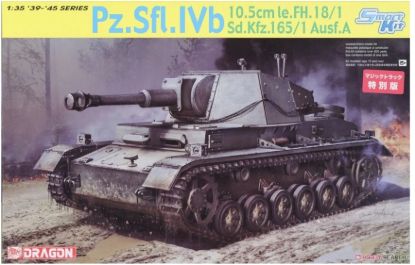
The full designation of this self-propelled artillery gun was Panzerfeldhaubitze 18M auf Geschützwagen III/IV (Sf) Hummel, Sd.Kfz.165.The German word ‘Hummel’ means bumblebee. This armored fighting vehicle had a nasty sting. There were two main types of self-propelled guns in the German Army during WW2. One was fitted with an anti-tank gun and the other with an artillery howitzer, like the Hummel. A vehicle fitted with an artillery field howitzer was called a ‘Geschützwagen’, which is literally translated as a ‘gun vehicle’. The letters ‘Sf’ stand for ‘Selbstfahrlafette’ – self-propelled carriage. ‘Panzerfeldhaubitze’ means armoured field howitzer.
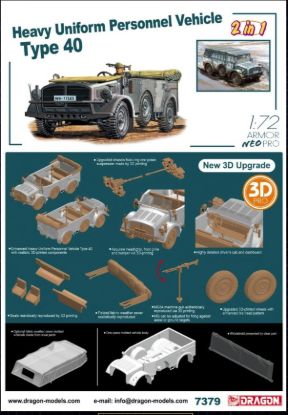
The Krupp Protze (Kfz.70 - Standard configuration for personnel carrying) was a six-wheeled 6×4 German truck and artillery tractor produced between 1934 and 1941 and heavily used in World War II. It was powered by a 4-cylinder, 55 hp or, from 1936, 60 hp Krupp M 304 petrol engine. Its main purpose was to tow artillery, especially the 3.7 cm Pak 36 anti-tank gun (designated Kfz 69), and transport motorized infantry (designated Kfz 70).