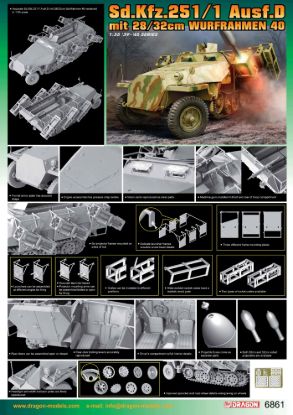
The Sd.Kfz.251/1 II mittlerer Schützenpanzerwagen mit Wurfrahmen, was a heavy rocket launcher platform (also dubbed “Stuka zum Fuss”), equipped with six massive 28cm Sprengranate (HE rounds) or 32cm Flammgranate (incendiary rounds), the latter using napalm. They were called Wurfrahmen 40, and had a range of 1.9 and 2.2 km, respectively. First ordered in late 1940, these Wurfkoerper rocket launching vehicles only appeared by 1943-44 in limited numbers.
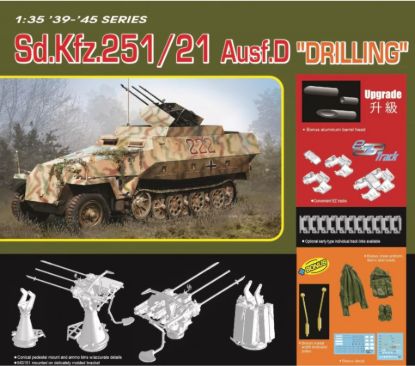
The SdKfz 251/21, also known as the Mittlerer Schutzenpanzerwagen - Drilling MG 151, was a very effective production anti-aircraft version of the SdKfz 251 halftrack. Mounted with three excellent 15mm MG 151/15 or 20mm MG 151/20 machine guns on a compact pedestal behind a small armored shield, having a rate of 700 rounds per minute per gun, these modified SdKfz251 halftracks could provide very effective defensive fire against the Allied aircraft.
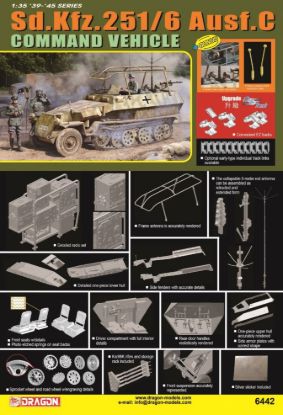
Sd.Kfz.251/6 – mittlere Funkpanzerwagen (Kommandopanzerwagen) - This early command and radio vehicle housed map boards, cipher and encoding machines in a rearranged compartment, based on Ausf.A/B versions.
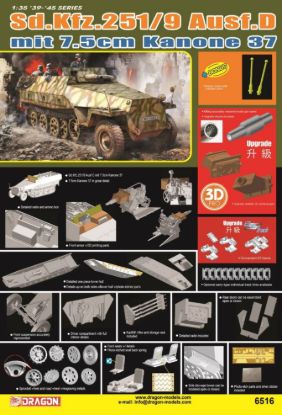
Sd.Kfz.251/9 – Schützenpanzerwagen (7.5 cm KwK 37 L/24) “Stummel” - The standard SPG variant, also called “kanonenwagen”, was equipped with a short-barrel 75 mm (2.95 in) howitzer, which used the same mounting as the StuG III. It was nicknamed “Stummel” (Stump), and committed in great numbers on the Eastern Front. First ordered in a March 1942 specification, Büssing-NAG delivered two prototypes in June, tested in Russia. A first batch of 150 vehicles was delivered during the following months, based on the Ausf.C. By late 1944, a major modification included a revised modular higher gun-mount with a coaxial MG 42 for close defense.
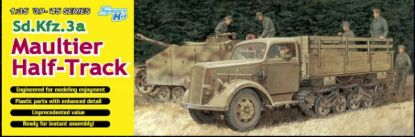
Maultier or Sd.Kfz. 3 is the name given to series of half-track trucks used by Nazi Germany during World War II. They were based on Opel, Mercedes-Benz, Alfa Romeo or Ford trucks. The vehicles were built by Opel at the Klöckner-Humboldt-Deutz AG and also in France in the Ford factory in Asnieres. In 1942 a total of 635 vehicles were produced, 1943 there were 13,000 and 1944 only 7,310.
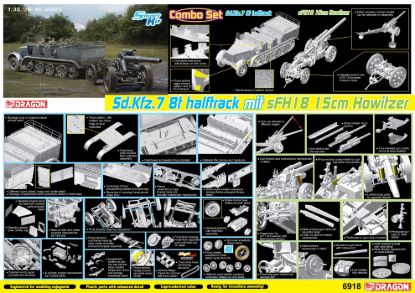
The Sd.Kfz. 7 was a half-track military vehicle used by the German Army, Luftwaffe and Waffen-SS during the Second World War. Sd.Kfz. is an abbreviation of the German word Sonderkraftfahrzeug, "special purpose vehicle". A longer designation is mittlerer Zugkraftwagen 8t, Sd.Kfz. 7, "medium towing motor vehicle 8t".
The Sd.Kfz. 7 was a half-track military vehicle used by the German Army, Luftwaffe and Waffen-SS during the Second World War. Sd.Kfz. is an abbreviation of the German word Sonderkraftfahrzeug, "special purpose vehicle". A longer designation is mittlerer Zugkraftwagen 8t, Sd.Kfz. 7, "medium towing motor vehicle 8t".
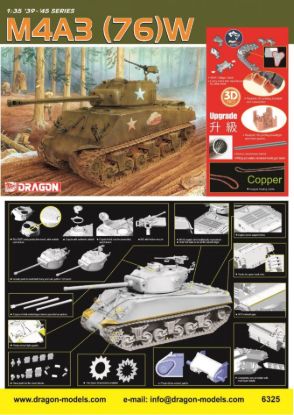
The M4 Sherman, officially Medium Tank, M4, was the medium tank most widely used by the United States and Western Allies in World War II. The M4 Sherman proved to be reliable, relatively cheap to produce, and available in great numbers. It was also the basis of several other armored fighting vehicles including self-propelled artillery, tank destroyers, and armored recovery vehicles.
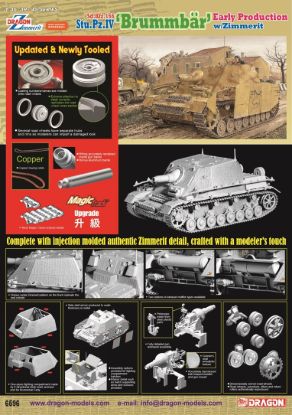
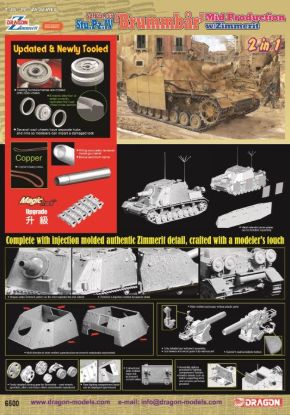
The Sturmpanzer (also known as Sturmpanzer 43 or Sd.Kfz. 166) is a German armoured infantry support gun based on the Panzer IV chassis used in the Second World War. It was used at the Battles of Kursk, Anzio, Normandy, and was deployed in the Warsaw Uprising. It was known by the nickname Brummbär (German: "Grouch")[Note 1] by Allied intelligence, a name which was not used by the Germans. German soldiers nicknamed it the "Stupa", a contraction of the term Sturmpanzer. Just over 300 vehicles were built and they were assigned to four independent battalions.
The Sturmpanzer (also known as Sturmpanzer 43 or Sd.Kfz. 166) is a German armoured infantry support gun based on the Panzer IV chassis used in the Second World War. It was used at the Battles of Kursk, Anzio, Normandy, and was deployed in the Warsaw Uprising. It was known by the nickname Brummbär (German: "Grouch")[Note 1] by Allied intelligence, a name which was not used by the Germans. German soldiers nicknamed it the "Stupa", a contraction of the term Sturmpanzer. Just over 300 vehicles were built and they were assigned to four independent battalions.
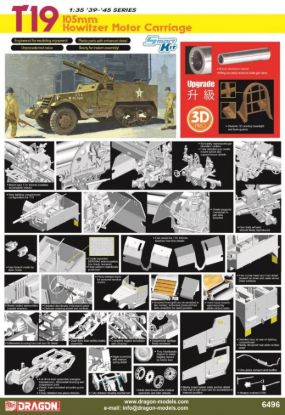
T19/M21 81 mm MMC – M3-based mortar motor carriage equipped with the M1 mortar (81 mm) (97 rounds), designed to allow the mortar to be fired from within the vehicle.
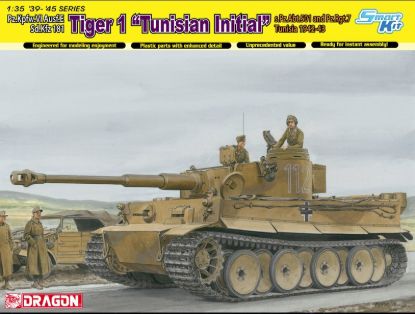
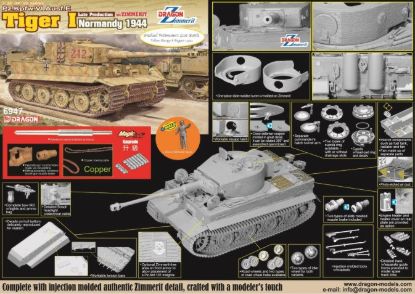
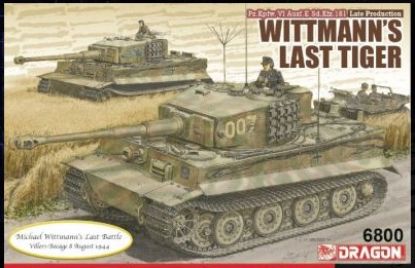
From the early days of combat against this tank in WW2 until the present day, the fame of the Tiger spans, in equal amounts, its real development history, combat performance, and fandom. It is a tank with many flaws and one whose mystique, even back in WW2, was out of all proportion to its utility and service as a combat vehicle. Yet, despite its flaws and problems, the tank remains a potent symbol of WW2 and, for many, it is the tank which served as their introduction to the world of armored fighting vehicles.