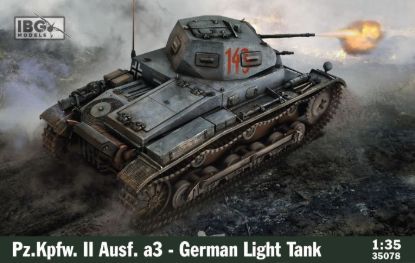
Although the vehicle had originally been designed as a stopgap while larger, more advanced tanks were developed, it nonetheless went on to play an important role in the early years of World War II, during the Polish and French campaigns. The Panzer II was the most numerous tank in the German Panzer divisions at the beginning of the war. It was used both in North Africa against the Western Allies and on the Eastern Front against the Soviet Union.
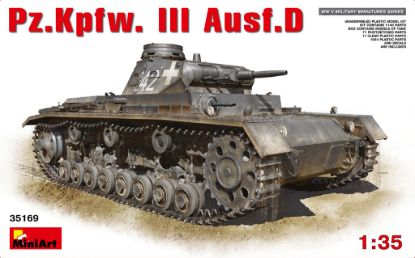
The Sd.Kfz. 141, also known as the Panzer III, was a medium tank developed by Germany in the 1930s. It was intended to engage other armored fighting vehicles and serve alongside the Panzer IV, which was designed for infantry support.
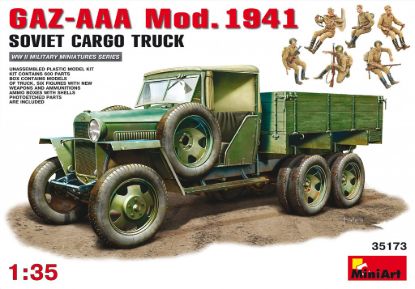
The GAZ-AAA was a significant vehicle in the Soviet military history, serving as a backbone for Red Army transportation during World War II. It was used in various roles, including as a mobile air-defense system, anti-aircraft unit, and even as infantry support.
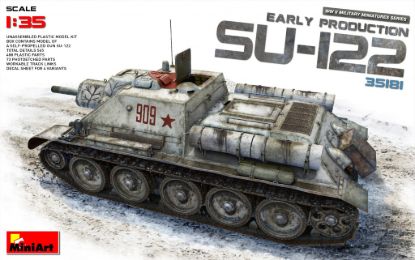
The SU-122 (from Samokhodnaya Ustanovka 122 mm) was a Soviet self-propelled howitzer or assault gun used during World War II. The number "122" in the designation represents the caliber of the main armament, a 122 mm M-30S howitzer. The chassis was that of the T-34.
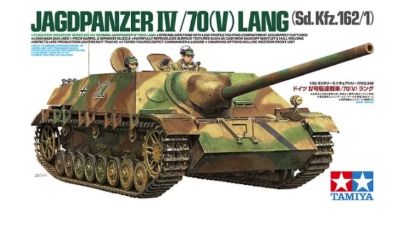
The Jagdpanzer IV / Sd.Kfz. 162, was a German tank destroyer based on the Panzer IV chassis and built in three main variants. As one of the casemate-style turretless Jagdpanzer (tank destroyer, literally "hunting tank") designs, it was developed against the wishes of Heinz Guderian, the inspector general of the Panzertruppen, as a replacement for the Sturmgeschütz III (StuG III). Guderian objected against the (in his eyes) needless diversion of resources from Panzer IV tank production, as the StuG III was still more than adequate for its role.