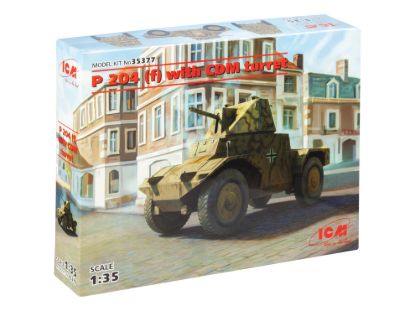
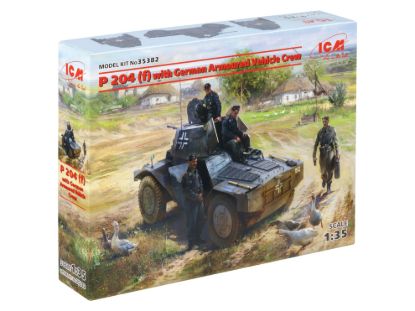
With the German invasion of France in May-June 1940, the French saw many of their vehicles abandoned by the side of roads because of lack of fuel or spare parts, or even of time to repair or refuel their vehicles before they would be overrun. These intact vehicles would be ripe for the taking for German forces, and there are indeed occasional reports of captured Panhard 178s, as well as other vehicles, such as the Renault UE, being fielded by German forces during the Campaign of France itself. The Panhard 178 was the only vehicle Vichy France was allowed to keep in service in mainland France by the terms of the armistice. A total of 64 vehicles, with the 25 mm gun replaced by another 7.5 mm machine gun, were approved under these conditions. In addition, there were at least 45 uncompleted hulls which were hidden away from the Germans and were later used for the Panhard 178 CDM conversions.
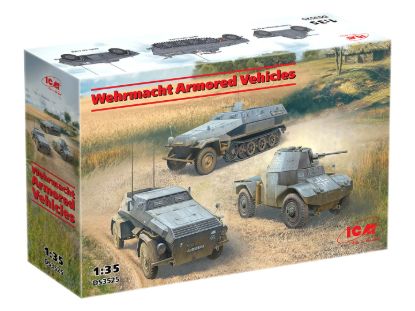
The Sd.Kfz. 251/1, also known as the mittlere Schützenpanzerwagen (IR) Falke, was the standard German personnel carrier and a significant vehicle in the military history of World War II. It was designed to transport a squad of Panzergrenadiers to the battlefield, providing protection from small arms fire and artillery shrapnel. The vehicle was armed with two MG34 or MG42 machine guns for defense and direct support. The Sd.Kfz. 251/1 was used extensively by Nazi Germany during the war, particularly on the Eastern front, and later in the Western front.
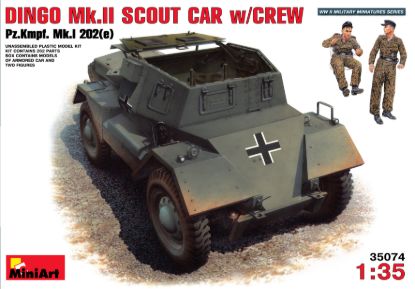
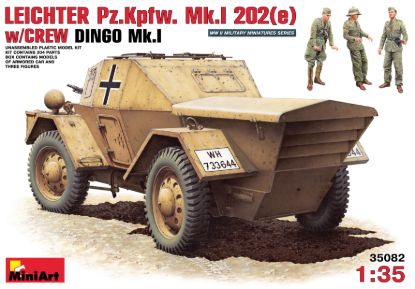
The Daimler Dingo, a variant of the Pz.Kmpf. Mk.I 202(e), was used by the Germans during the war, where it was transformed into the Pz.Kpfw.Mk.I 202. The Dingo's success in combat led to its continued use by various nations, including Cyprus, Portugal, and Sri Lanka, until the mid-1950s.
The Daimler Dingo, a variant of the Pz.Kmpf. Mk.I 202(e), was used by the Germans during the war, where it was transformed into the Pz.Kpfw.Mk.I 202. The Dingo's success in combat led to its continued use by various nations, including Cyprus, Portugal, and Sri Lanka, until the mid-1950s.
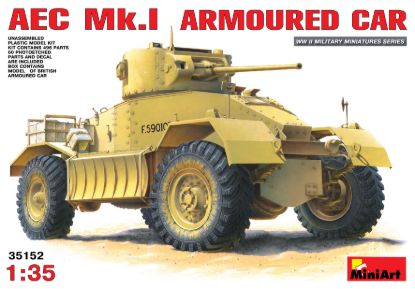
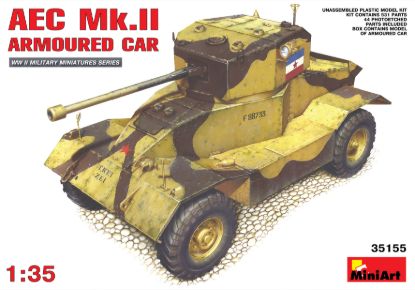
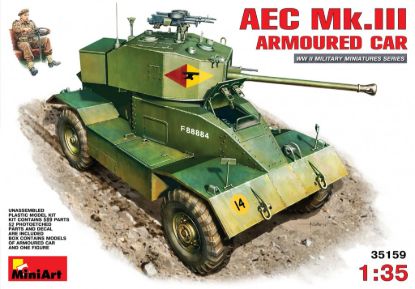
The Mk I was first used in combat in the North African Campaign late in 1942, where a few vehicles were reportedly fitted with a Crusader tank turret mounting a 6-pounder gun. The Mk II and Mk III took part in the fighting in Europe with British and British Indian Army units, often together with the American-supplied Staghound armoured car. The AEC armoured car with 75 mm gun replaced US half-track 75 mm self-propelled guns in the four fighting squadrons of some armoured car regiments. The vehicle remained in service after the end of the war until replaced by the Alvis Saladin. The Lebanese Army used the car at least until 1976. From 1956 some AEC turrets were added to Lebanese Staghound armoured cars.
The Mk I was first used in combat in the North African Campaign late in 1942, where a few vehicles were reportedly fitted with a Crusader tank turret mounting a 6-pounder gun. The Mk II and Mk III took part in the fighting in Europe with British and British Indian Army units, often together with the American-supplied Staghound armoured car. The AEC armoured car with 75 mm gun replaced US half-track 75 mm self-propelled guns in the four fighting squadrons of some armoured car regiments. The vehicle remained in service after the end of the war until replaced by the Alvis Saladin. The Lebanese Army used the car at least until 1976. From 1956 some AEC turrets were added to Lebanese Staghound armoured cars.
The Mk I was first used in combat in the North African Campaign late in 1942, where a few vehicles were reportedly fitted with a Crusader tank turret mounting a 6-pounder gun. The Mk II and Mk III took part in the fighting in Europe with British and British Indian Army units, often together with the American-supplied Staghound armoured car. The AEC armoured car with 75 mm gun replaced US half-track 75 mm self-propelled guns in the four fighting squadrons of some armoured car regiments. The vehicle remained in service after the end of the war until replaced by the Alvis Saladin. The Lebanese Army used the car at least until 1976. From 1956 some AEC turrets were added to Lebanese Staghound armoured cars.
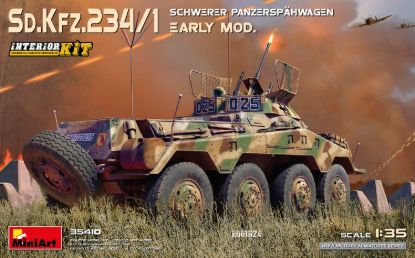
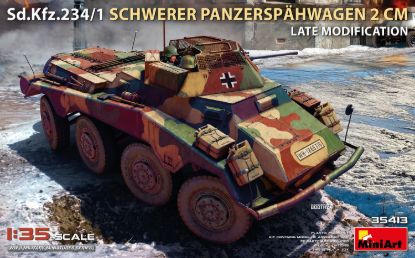
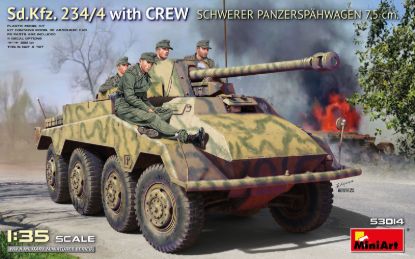
The SdKfz 234 Puma was a German eight-wheeled heavy armored car developed during World War II. The basic model was the command armored car SdKfz 234/1 with an open top, fully rotatable hexagonal turret with 2 cm quick-fire cannon. The Puma was primarily designed for reconnaissance missions, but its firepower (especially in the 234/2 variant) made it capable of engaging enemy light armor. Its excellent mobility and range allowed it to operate effectively behind enemy lines. The SdKfz 234 series represented the pinnacle of German armored car design during WWII, combining mobility, firepower, and reasonable protection. The diesel engine provided superior range compared to most contemporary vehicles.
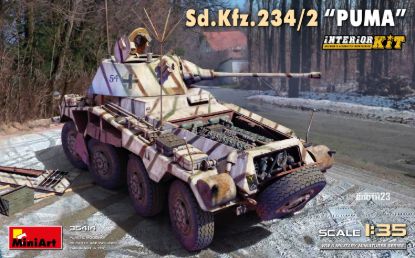
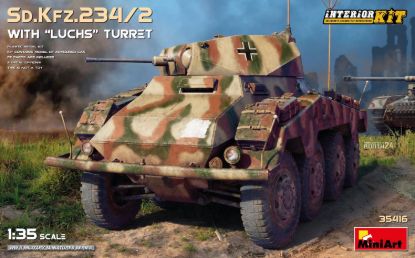
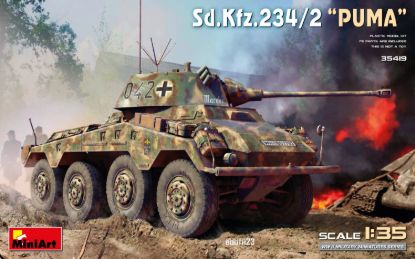
The SdKfz 234 Puma was a German eight-wheeled heavy armored car developed during World War II. The Puma was the SdKfz 234/2 with a turret shaped like a horse’s hoof from above with 5-cm-cannon was originally developed for the never put into service light main battle tank Leopard. The Puma was primarily designed for reconnaissance missions, but its firepower (especially in the 234/2 variant) made it capable of engaging enemy light armor. Its excellent mobility and range allowed it to operate effectively behind enemy lines. The SdKfz 234 series represented the pinnacle of German armored car design during WWII, combining mobility, firepower, and reasonable protection. The diesel engine provided superior range compared to most contemporary vehicles.
The SdKfz 234 Puma was a German eight-wheeled heavy armored car developed during World War II. The Puma was the SdKfz 234/2 with a turret shaped like a horse’s hoof from above with 5-cm-cannon was originally developed for the never put into service light main battle tank Leopard. The Puma was primarily designed for reconnaissance missions, but its firepower (especially in the 234/2 variant) made it capable of engaging enemy light armor. Its excellent mobility and range allowed it to operate effectively behind enemy lines. The SdKfz 234 series represented the pinnacle of German armored car design during WWII, combining mobility, firepower, and reasonable protection. The diesel engine provided superior range compared to most contemporary vehicles.
The SdKfz 234 Puma was a German eight-wheeled heavy armored car developed during World War II. The Puma was the SdKfz 234/2 with a turret shaped like a horse’s hoof from above with 5-cm-cannon was originally developed for the never put into service light main battle tank Leopard. The Puma was primarily designed for reconnaissance missions, but its firepower (especially in the 234/2 variant) made it capable of engaging enemy light armor. Its excellent mobility and range allowed it to operate effectively behind enemy lines. The SdKfz 234 series represented the pinnacle of German armored car design during WWII, combining mobility, firepower, and reasonable protection. The diesel engine provided superior range compared to most contemporary vehicles.
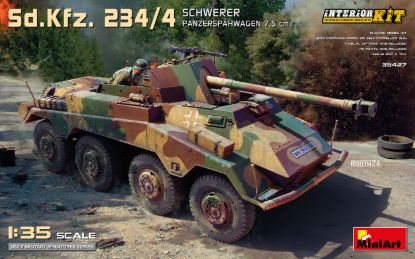
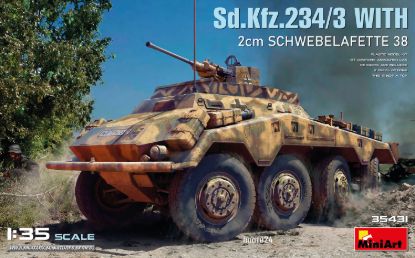
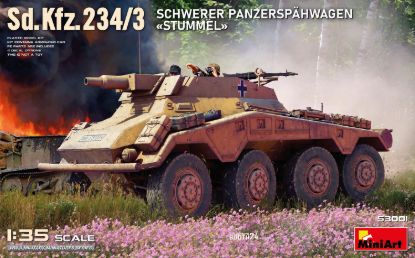
The SdKfz 234 Puma was a German eight-wheeled heavy armored car developed during World War II. After it was clear that a stronger armament was necessary to fight the Soviet tank units, the SdKfz 234/3 with a short 7.5 cm gun and then the SdKfz 234/4 with a long 7.5 cm Pak 40, which were rigidly mounted to the front in an open top stand, appeared. The Puma was primarily designed for reconnaissance missions, but its firepower (especially in the 234/2 variant) made it capable of engaging enemy light armor. Its excellent mobility and range allowed it to operate effectively behind enemy lines. The SdKfz 234 series represented the pinnacle of German armored car design during WWII, combining mobility, firepower, and reasonable protection. The diesel engine provided superior range compared to most contemporary vehicles.
The SdKfz 234 Puma was a German eight-wheeled heavy armored car developed during World War II. After it was clear that a stronger armament was necessary to fight the Soviet tank units, the SdKfz 234/3 with a short 7.5 cm gun and then the SdKfz 234/4 with a long 7.5 cm Pak 40, which were rigidly mounted to the front in an open top stand, appeared. The Puma was primarily designed for reconnaissance missions, but its firepower (especially in the 234/2 variant) made it capable of engaging enemy light armor. Its excellent mobility and range allowed it to operate effectively behind enemy lines. The SdKfz 234 series represented the pinnacle of German armored car design during WWII, combining mobility, firepower, and reasonable protection. The diesel engine provided superior range compared to most contemporary vehicles.
The SdKfz 234 Puma was a German eight-wheeled heavy armored car developed during World War II. After it was clear that a stronger armament was necessary to fight the Soviet tank units, the SdKfz 234/3 with a short 7.5 cm gun and then the SdKfz 234/4 with a long 7.5 cm Pak 40, which were rigidly mounted to the front in an open top stand, appeared. The Puma was primarily designed for reconnaissance missions, but its firepower (especially in the 234/2 variant) made it capable of engaging enemy light armor. Its excellent mobility and range allowed it to operate effectively behind enemy lines. The SdKfz 234 series represented the pinnacle of German armored car design during WWII, combining mobility, firepower, and reasonable protection. The diesel engine provided superior range compared to most contemporary vehicles.
The SdKfz 234 Puma was a German eight-wheeled heavy armored car developed during World War II. After it was clear that a stronger armament was necessary to fight the Soviet tank units, the SdKfz 234/3 with a short 7.5 cm gun and then the SdKfz 234/4 with a long 7.5 cm Pak 40, which were rigidly mounted to the front in an open top stand, appeared. The Puma was primarily designed for reconnaissance missions, but its firepower (especially in the 234/2 variant) made it capable of engaging enemy light armor. Its excellent mobility and range allowed it to operate effectively behind enemy lines. The SdKfz 234 series represented the pinnacle of German armored car design during WWII, combining mobility, firepower, and reasonable protection. The diesel engine provided superior range compared to most contemporary vehicles.
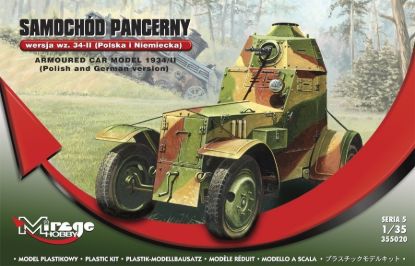
Samochód pancerny wz. 34 ("armored car, year 1934 model"), was a standard light armored car used by the Polish Army during the September Campaign of 1939.
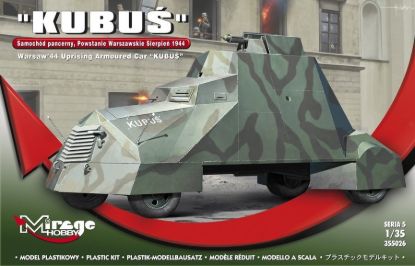
"Kubus" was built by the Polish Home Army during the Warsaw uprising of 1944. Only one vehicle was built and it took only about 13 days to complete. It was designed as an armored personnel carrier to be used during assaults.