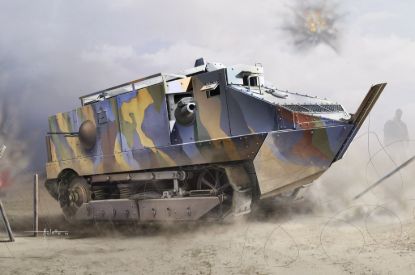
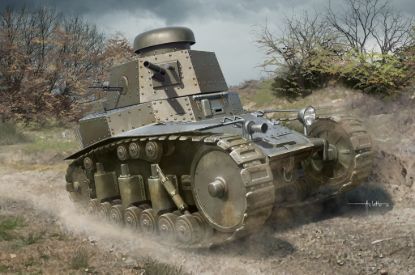
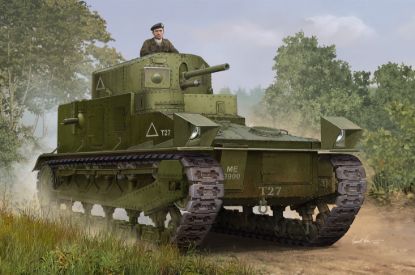
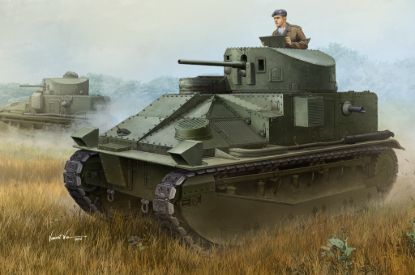
The T-18 light tank (also called MS-1) was the first Soviet-designed tank. Produced from 1928 to 1931, it was based on the Renault FT, with the addition of a vertically sprung suspension.
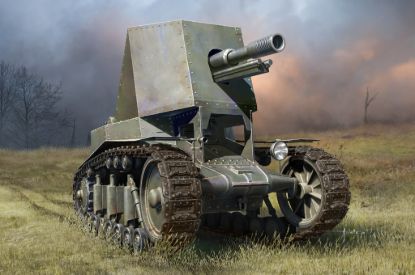
The SU-18 SPH is a Soviet self-propelled gun that was based on the T-18 chassis and used a 76.2-mm regimental gun model 1927. The design was based on a captured French Renault FT-17BS, but it replaced the turret with a truncated pyramid shape. The SU-18 had an ammunition capacity of 4-6 rounds and was known for its relatively slow speed and short range.
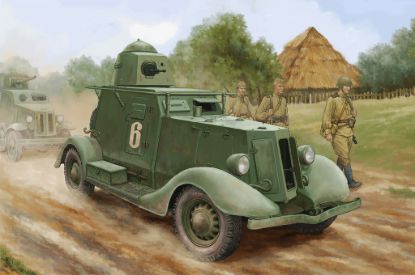
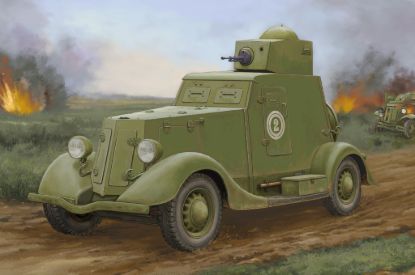
The BA-20 armored car was developed in 1934 for use by HQ staffs, reconnaissance and communications units. It was derived from the civilian GAZ-M1 car using its chassis, which was itself a modified version of a Ford design, produced by the Nizhny Novgorod-based vehicle manufacturer GAZ.
The BA-20 armored car was developed in 1934 for use by HQ staffs, reconnaissance and communications units. It was derived from the civilian GAZ-M1 car using its chassis, which was itself a modified version of a Ford design, produced by the Nizhny Novgorod-based vehicle manufacturer GAZ.
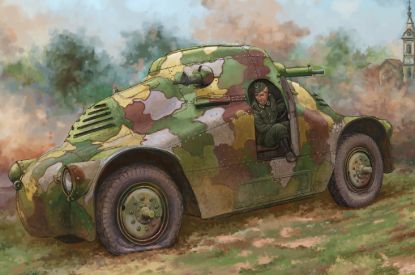
The Skoda PA-II Turtle Armored Car, also known as the "Zelva" (Turtle), was a Czech-designed armored vehicle that saw limited military use during World War II. Developed by Škoda, the PA-II was based on the earlier PA-I design but featured a new streamlined armored body.
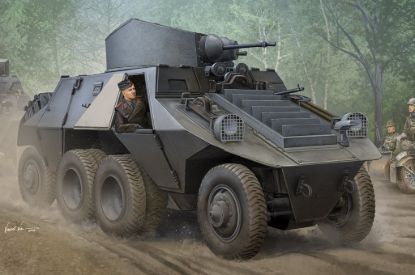
The ADGZ had 12 wheels, 4 axles, four headlights (two on each end), 6mm thick armor on the front, rear, and sides, and a dual transmission which allowed for the car to be driven from either end. The circular central turret housed a 20mm KwK 35 L/45 autocannon. Both sides were fitted with two half-doors where the top and bottom portions could be opened independently, as well as a ball mount on each side for an MG 34 machine gun.
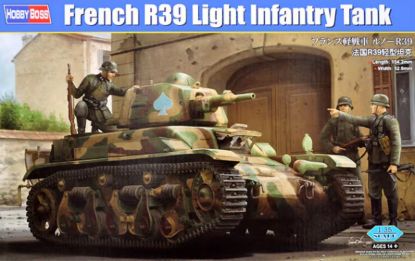
The Renault R39 was a significant part of the French military's efforts during World War II. It was an improved variant of the Renault R35 light tank, introduced just before the war.
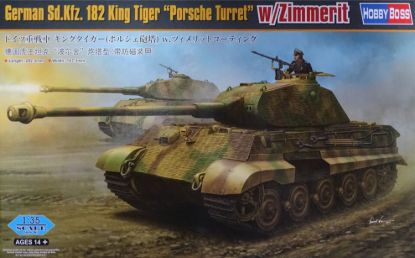
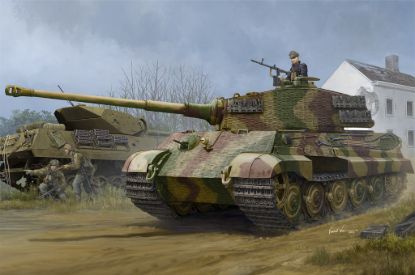
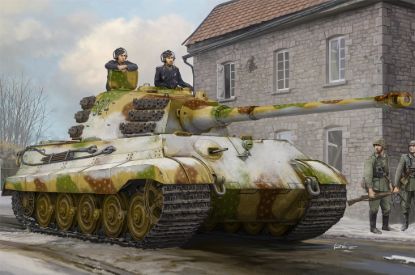
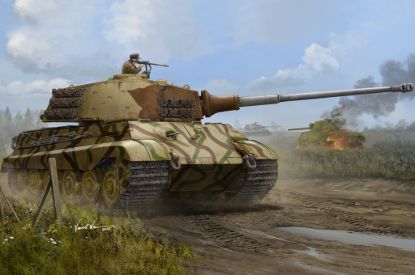
The Tiger II was the successor to the Tiger I, combining the latter's thick armour with the armour sloping used on the Panther medium tank. Contemporaneous Allied soldiers often called it the King Tiger or Royal Tiger. It was the costliest German tank to produce at the time. The tank weighed almost 70 tonnes and was protected by 100 to 185 mm (3.9 to 7.3 in) of armour to the front. It was armed with the long barrelled (71 calibres) 8.8 cm KwK 43 anti-tank cannon. The chassis was also the basis for the Jagdtiger turretless Jagdpanzer anti-tank vehicle.
The Tiger II was the successor to the Tiger I, combining the latter's thick armour with the armour sloping used on the Panther medium tank. Contemporaneous Allied soldiers often called it the King Tiger or Royal Tiger. It was the costliest German tank to produce at the time. The tank weighed almost 70 tonnes and was protected by 100 to 185 mm (3.9 to 7.3 in) of armour to the front. It was armed with the long barrelled (71 calibres) 8.8 cm KwK 43 anti-tank cannon. The chassis was also the basis for the Jagdtiger turretless Jagdpanzer anti-tank vehicle.
The Tiger II was the successor to the Tiger I, combining the latter's thick armour with the armour sloping used on the Panther medium tank. Contemporaneous Allied soldiers often called it the King Tiger or Royal Tiger. It was the costliest German tank to produce at the time. The tank weighed almost 70 tonnes and was protected by 100 to 185 mm (3.9 to 7.3 in) of armour to the front. It was armed with the long barrelled (71 calibres) 8.8 cm KwK 43 anti-tank cannon. The chassis was also the basis for the Jagdtiger turretless Jagdpanzer anti-tank vehicle.
The Tiger II was the successor to the Tiger I, combining the latter's thick armour with the armour sloping used on the Panther medium tank. Contemporaneous Allied soldiers often called it the King Tiger or Royal Tiger. It was the costliest German tank to produce at the time. The tank weighed almost 70 tonnes and was protected by 100 to 185 mm (3.9 to 7.3 in) of armour to the front. It was armed with the long barrelled (71 calibres) 8.8 cm KwK 43 anti-tank cannon. The chassis was also the basis for the Jagdtiger turretless Jagdpanzer anti-tank vehicle.
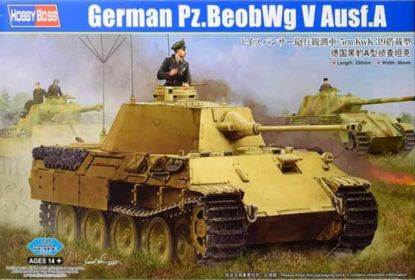
The Pz.BeobWg V Ausf.A, also known as the Panther IV artillery observation tank, was developed as a successor to the Panther IV. It was based on the A-type hull and equipped with a swivel turret and a dummy barrel. By the end of the war, about 40 vehicles had been completed, and some were said to have been deployed in combat.
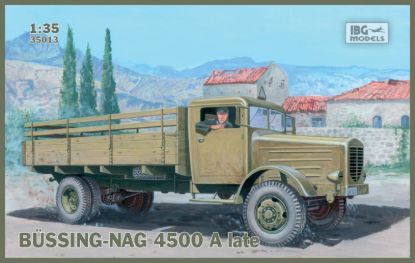
The Bussing-NAG 4500 series was a significant part of the German military's heavy truck production during World War II. These trucks were known for their reliability and were used to transport fuel, ammunition, and troops across Europe's battlefields. The 4500 series was produced from 1941 to 1945, with nearly 15,000 units manufactured.
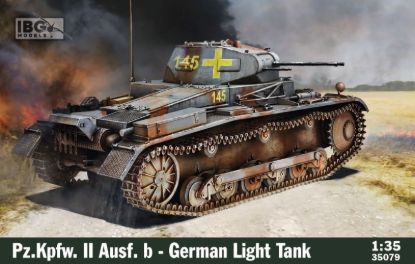
Although the vehicle had originally been designed as a stopgap while larger, more advanced tanks were developed, it nonetheless went on to play an important role in the early years of World War II, during the Polish and French campaigns. The Panzer II was the most numerous tank in the German Panzer divisions at the beginning of the war. It was used both in North Africa against the Western Allies and on the Eastern Front against the Soviet Union.