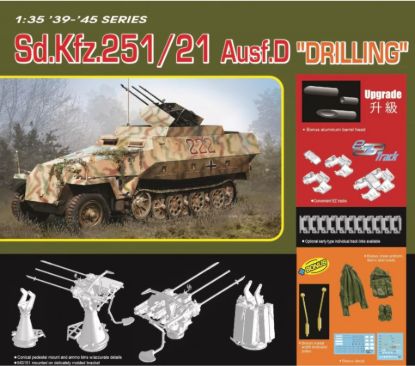
The SdKfz 251/21, also known as the Mittlerer Schutzenpanzerwagen - Drilling MG 151, was a very effective production anti-aircraft version of the SdKfz 251 halftrack. Mounted with three excellent 15mm MG 151/15 or 20mm MG 151/20 machine guns on a compact pedestal behind a small armored shield, having a rate of 700 rounds per minute per gun, these modified SdKfz251 halftracks could provide very effective defensive fire against the Allied aircraft.
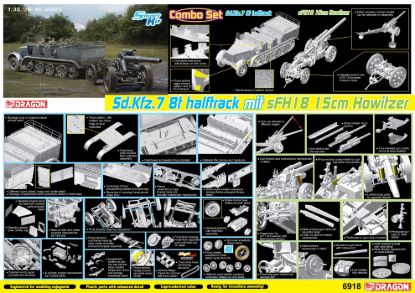
The Sd.Kfz. 7 was a half-track military vehicle used by the German Army, Luftwaffe and Waffen-SS during the Second World War. Sd.Kfz. is an abbreviation of the German word Sonderkraftfahrzeug, "special purpose vehicle". A longer designation is mittlerer Zugkraftwagen 8t, Sd.Kfz. 7, "medium towing motor vehicle 8t".
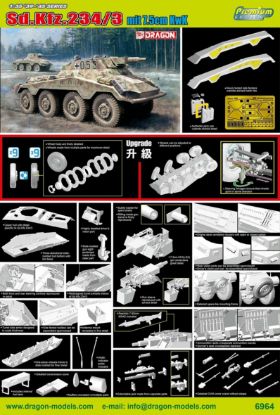
The SdKfz 234 Puma was a German eight-wheeled heavy armored car developed during World War II. After it was clear that a stronger armament was necessary to fight the Soviet tank units, the SdKfz 234/3 with a short 7.5 cm gun and then the SdKfz 234/4 with a long 7.5 cm Pak 40, which were rigidly mounted to the front in an open top stand, appeared. The Puma was primarily designed for reconnaissance missions, but its firepower (especially in the 234/2 variant) made it capable of engaging enemy light armor. Its excellent mobility and range allowed it to operate effectively behind enemy lines. The SdKfz 234 series represented the pinnacle of German armored car design during WWII, combining mobility, firepower, and reasonable protection. The diesel engine provided superior range compared to most contemporary vehicles.
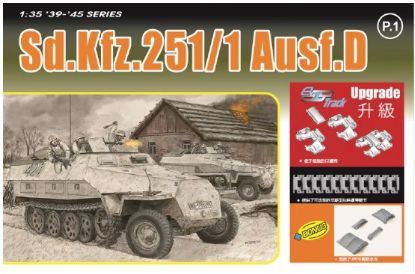
The Sd.Kfz. 251/1, also known as the mittlere Schützenpanzerwagen (IR) Falke, was the standard German personnel carrier and a significant vehicle in the military history of World War II. It was designed to transport a squad of Panzergrenadiers to the battlefield, providing protection from small arms fire and artillery shrapnel. The vehicle was armed with two MG34 or MG42 machine guns for defense and direct support. The Sd.Kfz. 251/1 was used extensively by Nazi Germany during the war, particularly on the Eastern front, and later in the Western front.
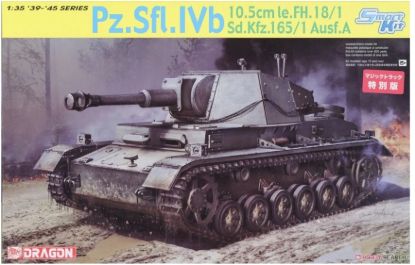
The full designation of this self-propelled artillery gun was Panzerfeldhaubitze 18M auf Geschützwagen III/IV (Sf) Hummel, Sd.Kfz.165.The German word ‘Hummel’ means bumblebee. This armored fighting vehicle had a nasty sting. There were two main types of self-propelled guns in the German Army during WW2. One was fitted with an anti-tank gun and the other with an artillery howitzer, like the Hummel. A vehicle fitted with an artillery field howitzer was called a ‘Geschützwagen’, which is literally translated as a ‘gun vehicle’. The letters ‘Sf’ stand for ‘Selbstfahrlafette’ – self-propelled carriage. ‘Panzerfeldhaubitze’ means armoured field howitzer.
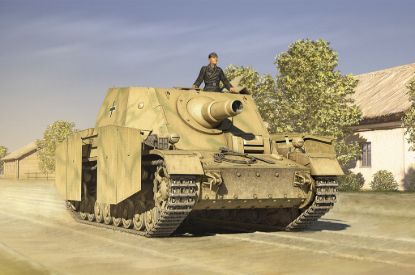
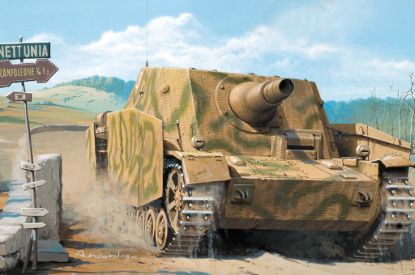
The Sturmpanzer (also known as Sturmpanzer 43 or Sd.Kfz. 166) is a German armoured infantry support gun based on the Panzer IV chassis used in the Second World War. It was used at the Battles of Kursk, Anzio, Normandy, and was deployed in the Warsaw Uprising. It was known by the nickname Brummbär (German: "Grouch")[Note 1] by Allied intelligence, a name which was not used by the Germans. German soldiers nicknamed it the "Stupa", a contraction of the term Sturmpanzer. Just over 300 vehicles were built and they were assigned to four independent battalions.
The Sturmpanzer (also known as Sturmpanzer 43 or Sd.Kfz. 166) is a German armoured infantry support gun based on the Panzer IV chassis used in the Second World War. It was used at the Battles of Kursk, Anzio, Normandy, and was deployed in the Warsaw Uprising. It was known by the nickname Brummbär (German: "Grouch")[Note 1] by Allied intelligence, a name which was not used by the Germans. German soldiers nicknamed it the "Stupa", a contraction of the term Sturmpanzer. Just over 300 vehicles were built and they were assigned to four independent battalions.
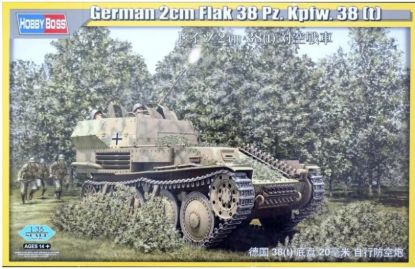
The Flakpanzer 38(t), officially named Flakpanzer 38(t) auf Selbstfahrlafette 38(t) Ausf M (Sd.Kfz. 140), was a German self-propelled anti-aircraft gun used in World War II. It is sometimes incorrectly referred to as the Gepard, which may lead to confusion with the unrelated Flakpanzer Gepard.
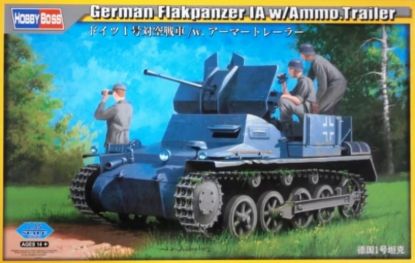
The Panzer I saw combat in the Spanish Civil War and WWII. The Panzer I's design history can be traced to the British Carden Loyd tankette, of which it borrowed much of its track and suspension design.
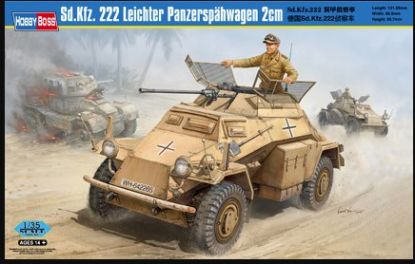
The Sd.Kfz. 222's development and deployment were marked by its success in early campaigns against unprepared opponents, but it faced significant vulnerabilities when confronting well-equipped Allied forces. The vehicle's armor-piercing vulnerability was discovered during tests, leading to its eventual replacement by the Sd.Kfz. 234 Puma. The Sd.Kfz. 222's history is a testament to the complexities of armored vehicle development and the impact of engineering compromises on battlefield performance.
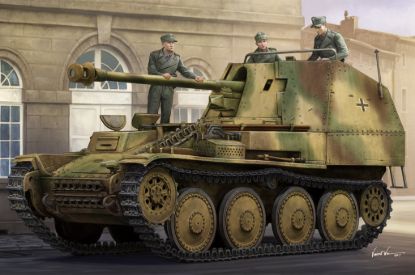
The Marder III, specifically, was equipped with the German 7.5 cm PaK 40 anti-tank gun, which was highly effective in penetrating the armor of most Allied tanks at standard engagement ranges. The Marder III served on all fronts until the end of the war, providing significant firepower to counter the thick-armored T-34s.
The Sd.Kfz. 222's development and deployment were marked by its success in early campaigns against unprepared opponents, but it faced significant vulnerabilities when confronting well-equipped Allied forces. The vehicle's armor-piercing vulnerability was discovered during tests, leading to its eventual replacement by the Sd.Kfz. 234 Puma. The Sd.Kfz. 222's history is a testament to the complexities of armored vehicle development and the impact of engineering compromises on battlefield performance.
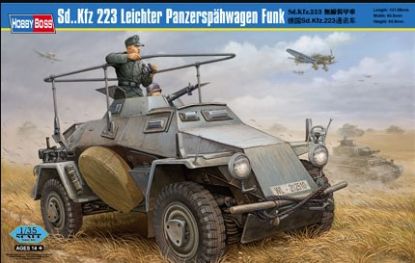
The Sd.Kfz. 223 was Command and Communications vehicle, distinguished by its large collapsible aerial antenna frame above the gun emplacement. It featured a crew of three, including a driver, commander, and machine gunner. The Sd.Kfz. 223 was produced in 567 units from 1936 to January 1944, benefiting from its dedicated armored chassis and Horch V8 gasoline engine for cross-country travel. The vehicle's design was closely related to the Sd.Kfz. 221, with a stepped rear upper hull section and a tapered hatch covering the engine compartment. The Sd.Kfz. 223 was used for reconnaissance and communications missions, with its light armor protection and 4x4 wheeled design providing it with the necessary strength for military service.
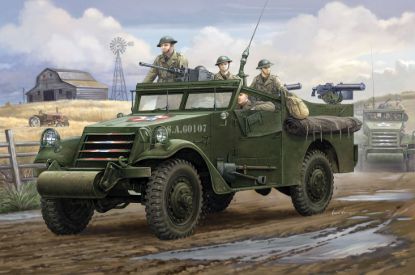
The M3A1 Scout Car, also known as the White Scout Car, was an American armored car produced during World War II. It was used in various roles, including patrol, scouting, command vehicle, ambulance, and gun tractor.
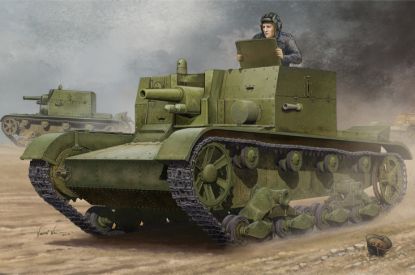
The AT-1 is a Soviet self-propelled gun prototype developed in the 1930s, based on the T-26 light tank chassis, featuring a 76.2 mm gun and designed for artillery support.
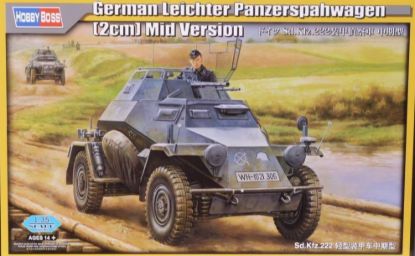
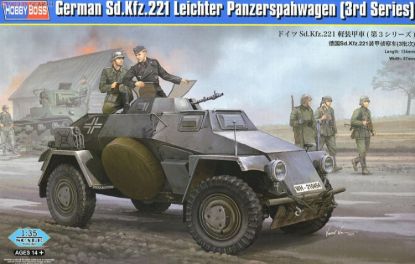
The Leichter Panzerspähwagen (Sd.Kfz. 221) was the first in a series of light reconnaissance vehicles designed to meet operational requirements including reliability, an ability to run on a variety of grades of fuel, simple construction and good off-road performance.
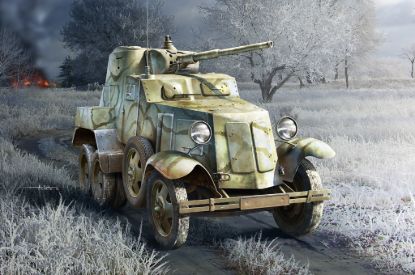
The BA-10 (Russian: Broneavtomobil 10) was an armored car developed in the Soviet Union in 1938 and produced through 1941. It was the most produced Soviet pre-1941 heavy armored car – 3311 were built in three versions. These versions were the BA-10, the BA-10M (improved version with new radio), and the BA-10ZhD (equipped for dual railway/road use).
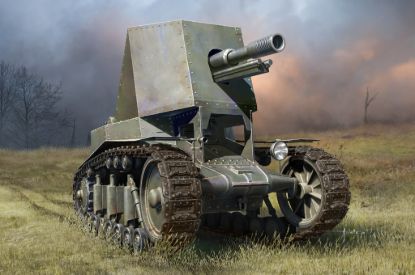
The SU-18 SPH is a Soviet self-propelled gun that was based on the T-18 chassis and used a 76.2-mm regimental gun model 1927. The design was based on a captured French Renault FT-17BS, but it replaced the turret with a truncated pyramid shape. The SU-18 had an ammunition capacity of 4-6 rounds and was known for its relatively slow speed and short range.
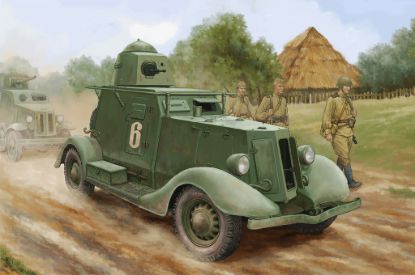
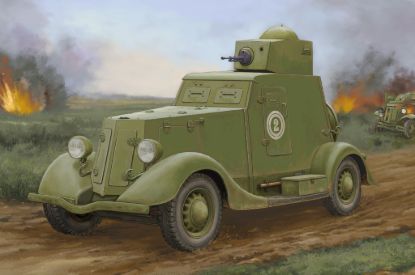
The BA-20 armored car was developed in 1934 for use by HQ staffs, reconnaissance and communications units. It was derived from the civilian GAZ-M1 car using its chassis, which was itself a modified version of a Ford design, produced by the Nizhny Novgorod-based vehicle manufacturer GAZ.
The BA-20 armored car was developed in 1934 for use by HQ staffs, reconnaissance and communications units. It was derived from the civilian GAZ-M1 car using its chassis, which was itself a modified version of a Ford design, produced by the Nizhny Novgorod-based vehicle manufacturer GAZ.
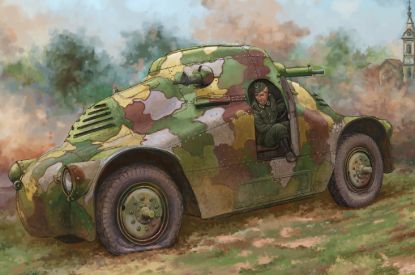
The Skoda PA-II Turtle Armored Car, also known as the "Zelva" (Turtle), was a Czech-designed armored vehicle that saw limited military use during World War II. Developed by Škoda, the PA-II was based on the earlier PA-I design but featured a new streamlined armored body.
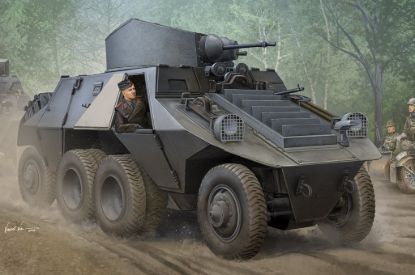
The ADGZ had 12 wheels, 4 axles, four headlights (two on each end), 6mm thick armor on the front, rear, and sides, and a dual transmission which allowed for the car to be driven from either end. The circular central turret housed a 20mm KwK 35 L/45 autocannon. Both sides were fitted with two half-doors where the top and bottom portions could be opened independently, as well as a ball mount on each side for an MG 34 machine gun.